Why Quality Craftsmanship Matters in Clothing

Table of Contents
- The Real Cost of Cheap Clothing: Why Quality Craftsmanship Matters
- How to Identify Quality Clothing Construction Like a Pro
- The Benefits of American Made Clothing: Domestic Manufacturing's Impact
- Cost-Per-Wear: The Math That Changes How You Shop
- Caring for Quality Garments: Maintenance Rituals That Extend Lifespan
- From Fast Fashion to Slow Fashion: The Sustainability Connection
- Frequently Asked Questions
Last Updated: September 13, 2026
The Real Cost of Cheap Clothing: Why Quality Craftsmanship Matters
A garment that costs less than a fast-food meal carries a hidden price. It shows up in the wash after three wears, in the landfill after three months, and in the slow erosion of skills that once made clothing worth keeping. This guide from Steady Clothing examines why quality craftsmanship matters in clothing, and how understanding construction, materials, and care changes the way you shop.

Quality craftsmanship is the deliberate application of skilled construction techniques, durable materials, and rigorous finishing to produce a garment that performs and endures. It is not a marketing label. It is measurable in stitch density, seam reinforcement, and fabric weight.
The difference between a well-made garment and a disposable one comes down to decisions made before the first cut. According to the Federal Trade Commission's guidance on textile labeling, manufacturers must disclose fiber content and country of origin, giving shoppers a starting point for evaluating what they buy. Those labels are the first tool in separating construction from packaging.
Below, we break down how to spot quality construction, why domestic manufacturing matters, and the simple math that reframes how you think about price.
How to Identify Quality Clothing Construction Like a Pro
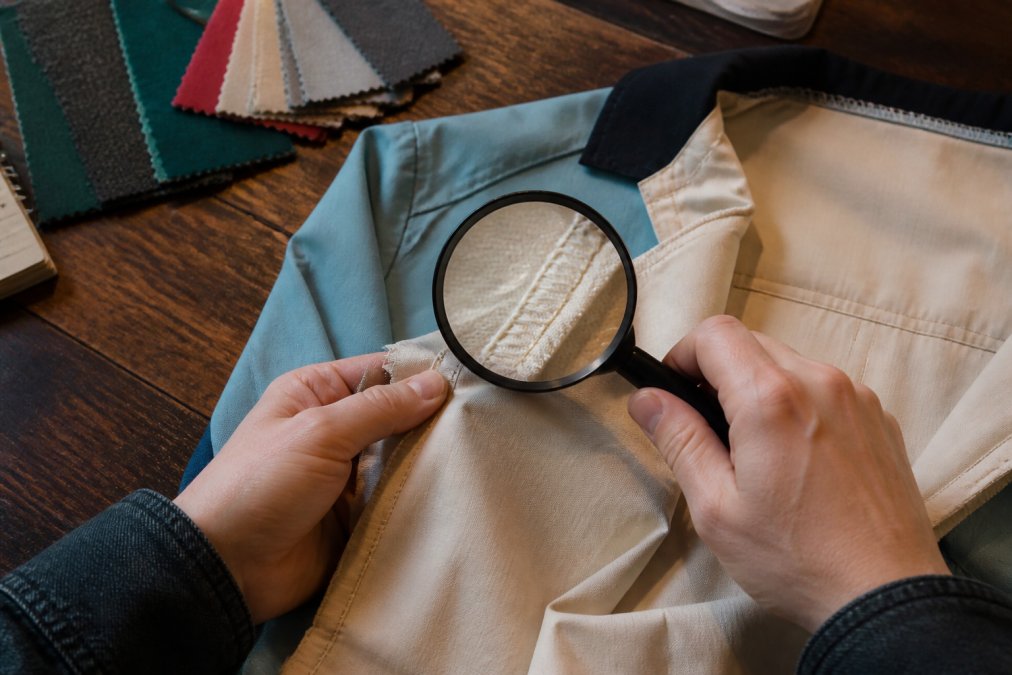
Identifying quality construction starts with turning the garment inside out. Interior finishing reveals more about how a piece was built than any exterior detail, because hidden seams cannot be disguised with styling. A garment can look crisp on a hanger and still be assembled with the cheapest possible interior, the inside is where the truth lives.
Stitch Density and Seam Types
Stitch density is the number of stitches per inch (SPI) along a seam. Higher density generally signals better construction, because more stitches distribute stress across the fabric rather than concentrating it at weak points. A common industry benchmark is roughly 10 to 12 SPI for a durable seam on medium-weight woven fabric; below about 8 SPI, the seam is doing less work than the fabric around it and will be the first thing to fail. A common mistake is judging a garment by its outer appearance while ignoring whether seams are reinforced at stress points like armholes, side seams, and button plackets.
Learn to name the seams you are looking at, because the finish tells you what the maker was willing to spend:
- Flat-felled seam, the fabric edges are folded over each other and stitched down, so no raw edge is exposed. This is the standard on denim and workwear because it is strong and self-finishing. If a shirt claims workwear durability but uses a plain seam, that is a tell.
- French seam, the raw edges are enclosed inside a folded seam, producing a clean finish on both sides. Common on fine shirting and lightweight fabrics where a serged edge would feel scratchy against skin.
- Bound seam, a strip of fabric wraps the raw edge. Often used on unlined jackets and tailored pieces where the interior is meant to be seen.
- Serged (overlocked) seam, the raw edge is wrapped in thread. This is the fastest and cheapest finish and is not inherently bad, but on a garment sold as premium it is a signal that corners were cut.
Beyond the seam itself, look for these reinforcement markers:
- Bar tacks, short, dense zigzag stitches placed at pocket corners, fly openings, and belt loops to stop fabric from tearing. A pocket with no bar tack will rip at the corner first.
- Backstitching, seams that are stitched back over themselves at the start and end rather than left loose. Loose thread tails mean the seam can unravel from the end inward.
- Shanked buttons, buttons sewn with a small column of thread beneath them so the fabric has room to move. Flat-sewn buttons on a thick placket pull and pop.
- Bias-cut or reinforced facings, on collars and cuffs, a strip cut on the bias follows the curve without puckering. A straight-cut facing on a curved edge is a shortcut.
Fabric Weave and Weight
Weave quality determines how a fabric drapes, breathes, and wears over time. A tighter, more uniform weave resists distortion and pilling better than a loose one. Hold the fabric up to a light: if you can see a dense, even grid, the weave is tight; if light pours through unevenly, the yarns are inconsistent and the fabric will distort at stress points.
Fabric weight is measured in ounces per square yard (oz/yd²) or, for knits, in grams per square meter (GSM). Heavier fabrics generally outlast lighter ones in high-wear applications, though the right weight depends on the garment's purpose. As a rough reference point, a standard cotton T-shirt runs about 5 to 6 oz/yd², a mid-weight button-up shirt about 4 to 5 oz/yd², and a workwear-grade denim or canvas jacket 12 oz/yd² and up. A garment that claims durability but uses a weight far below its category is a marketing claim, not a construction one.
The Anatomy of a Garment: A Quick Interior Checklist
When you turn a garment inside out, run this sequence:
- Seam finish, flat-felled, French, or bound, or a raw serged edge?
- Stitch density, even and tight, or sparse and loose?
- Stress-point reinforcement, bar tacks at pockets, backstitching at seam ends?
- Button attachment, shanked or flat?
- Facing and lining, cut to follow curves, or straight-cut and puckering?
- Fabric weight, appropriate to the garment's stated purpose?
A garment that passes all six is built to be worn, not just sold. A garment that fails three or more is priced for the rack, not the wardrobe.
The Benefits of American Made Clothing: Domestic Manufacturing's Impact
Domestic manufacturing shortens the distance between the people who make a garment and the people who wear it. That proximity supports tighter quality control, because production runs can be inspected at each stage rather than assembled from components sourced across multiple countries.

The benefits of American made clothing extend beyond the label. Domestic production keeps specialized skills, from embroidery to custom button work, within reach of the businesses that rely on them. It also makes smaller, custom runs more practical. A bar ordering branded staff uniforms or a car club ordering matching shirts can work directly with a manufacturer on fabric, embroidery, and fit rather than navigating overseas minimums and long lead times.
Steady Clothing designs and manufactures its vintage-inspired apparel in the USA, which lets the company offer custom bulk orders with unique fabrics, embroidery, and custom buttons. For groups that need consistent quality across dozens of pieces, that control matters.
Cost-Per-Wear: The Math That Changes How You Shop
Cost-per-wear is the purchase price divided by the number of times you actually wear the garment. It is the single most useful number in a wardrobe, and almost nobody calculates it.
A shirt worn twice a week for two years delivers over 200 wears. A cheaper shirt that pills, fades, or loses its shape after ten wears delivers ten. The cheaper shirt can cost more per wear than the well-made one, even at a fraction of the sticker price.
Run the math before you buy:
- Estimate how often you will realistically wear the item
- Estimate its usable lifespan based on construction and fabric
- Divide price by total wears
- Compare that figure across your options
Caring for Quality Garments: Maintenance Rituals That Extend Lifespan
Maintenance is where most wardrobes quietly fail. A well-constructed garment can last years longer with a few consistent habits, and the opposite is also true: careless washing ruins good clothing faster than cheap construction ever could.
What most guides miss is that care routines should match the fabric, not the calendar. Build a simple ritual:
- Wash less often, and spot-clean between washes
- Turn garments inside out before laundering to protect the exterior finish
- Use cold water and a gentle cycle to reduce fiber stress
- Air-dry when possible; heat is the enemy of elasticity and color
- Store folded or on sturdy hangers to preserve shape
From Fast Fashion to Slow Fashion: The Sustainability Connection
Slow fashion is the practice of buying fewer, better-made garments and keeping them in use longer. It is the natural outcome of understanding construction, cost-per-wear, and care, because once you see the math, disposable clothing stops making sense.
The environmental case follows the same logic. According to the U.S. Environmental Protection Agency's materials management data, textiles make up a significant share of municipal solid waste, and extending a garment's life directly reduces what reaches landfills. Every year a piece stays in rotation is a year it is not being replaced.
The Supply Chain Angle Most Quality Guides Skip
Here is the part the standard "buy better" advice leaves out: craftsmanship is not only a materials story. It is a labor story. A garment built with flat-felled seams, bar tacks, and shanked buttons takes more minutes of skilled human attention than one assembled with the fastest possible serged seams. Those minutes have to be paid for, and where they are not, the savings come out of someone's wage.
This is why the craftsmanship question and the ethical-labor question are the same question asked from two directions. A brand that can tell you who sewed the garment, where the fabric was milled, and how the workers were compensated is usually a brand that can also tell you why the seams are finished the way they are. Transparency and construction quality tend to travel together, because both require a maker to slow down and pay attention.
A few concrete things to look for when you want to verify the labor side of a craftsmanship claim:
- Named factories or mills, a brand that names its production partners is inviting scrutiny, which is a stronger signal than a vague "ethically made" badge.
- Wage and audit disclosures, some brands publish third-party social-compliance audit summaries. Absence of any disclosure is not proof of harm, but presence of one is a meaningful signal.
- Domestic and small-batch production, shorter supply chains are easier to inspect at each stage, which is one reason domestic manufacturing often correlates with tighter quality control.
- Repair and resale programs, a brand that offers repairs or takes back its own garments is financially invested in the garment lasting, which aligns its incentives with yours.
None of these is a guarantee. But a brand that is silent on all four is asking you to take the craftsmanship claim on faith, and faith is not a construction standard.
Cultural Heritage and the Skills Behind the Seams
Cultural heritage plays a role here too. Traditional techniques like custom embroidery and hand-finished detailing carry skills passed down through generations. When buyers choose handcrafted, well-constructed clothing over mass production, they help keep those techniques alive. As noted by the Smithsonian's textile heritage resources, preserving craft knowledge depends on continued demand for the work itself.
The mechanism is straightforward: skills are maintained by practice, and practice is funded by demand. When a technique stops being ordered, the people who know how to do it stop being able to make a living doing it, and the knowledge disperses. Buying a hand-embroidered garment is not nostalgia. It is a market signal that the skill is worth keeping.
Frequently Asked Questions
What is the 3-3-3 rule for clothing?
The 3-3-3 rule is a simple guideline for building a versatile wardrobe: 3 tops, 3 bottoms, and 3 pairs of shoes that can mix and match to create at least 9 different outfits. This approach encourages buying fewer, higher-quality pieces that work together. Focusing on quality craftsmanship ensures each item lasts longer and maintains its appearance, making the 3-3-3 rule more practical and cost-effective over time.
How does craftsmanship directly impact the longevity of a garment?
Craftsmanship affects longevity through details like reinforced seams, higher stitch density, and quality raw materials. For example, a shirt with 8-10 stitches per inch and double-stitched seams resists fraying and tearing far better than one with sparse stitching. Quality buttons and precise finishing also prevent common failure points. These construction choices mean the garment survives repeated washing and wear, often lasting years instead of months.
What are the tell-tale signs of high-quality clothing construction?
Look for these signs: patterns that match at seams, clean serged or French seams inside, no loose threads, buttons sewn with a shank for durability, and fabrics with a tight weave that holds shape. Also check for consistent stitch length and reinforced stress points like armholes and pocket corners. A garment that feels substantial and drapes well without sagging often indicates quality construction.
Why is domestic manufacturing often associated with better craftsmanship?
Domestic manufacturing, such as American made clothing, often allows for closer oversight of production, better working conditions, and higher quality control standards. Brands can visit factories, ensure ethical practices, and respond quickly to issues. This proximity frequently results in more attention to detail, use of superior materials, and support for local economies, all of which contribute to better craftsmanship and garment durability.
Cheap clothing is rarely cheap. It trades upfront savings for shorter lifespan, higher cost-per-wear, and a wardrobe that never quite works. Steady Clothing builds the alternative: vintage-inspired apparel designed and manufactured in the USA, with unique fabrics, custom buttons, and intricate embroidery, available for individuals and bulk custom orders alike. Get started with Steady Clothing and build a wardrobe that earns its place. Order Custom Shirts In Bulk!