Authentic 1950s Style Clothing for Men: A 2026 Guide

Table of Contents
- The 1950s Silhouette: What Defined the Decade
- 7 Men's 1950s Fashion Staples You Need
- Vintage Inspired Bowling Shirts: The Casual Icon
- How to Style 1950s Menswear for Today
- Where to Find Quality Pieces: Authentic vs. Reproduction
- Sizing, Fit, and Care for Your Vintage Wardrobe
- Conclusion: Building Your Timeless 1950s Wardrobe
- Frequently Asked Questions
Last Updated: September 7, 2026
Authentic 1950s style clothing for men is more than a costume; it is a study in tailored confidence that still influences modern menswear. The decade bridged the rigid formality of the 1940s and the coming casual revolution, creating a versatile wardrobe that men today can actually wear. This guide from Steady Clothing breaks down the essential garments, the fit principles, and the practical steps for building a collection that looks period-correct without feeling like a museum piece.
The key to nailing the look is understanding the architecture of the clothes. 1950s style clothing relies on a specific silhouette: broad, padded shoulders, a nipped waist, and trousers that sit high on the natural waist with a full, straight leg. Get these proportions right, and the era reads instantly. Get them wrong, and you just look like you borrowed a suit from a costume shop.
Below, we’ll walk through the seven staples that define the era, how to style them today, and the crucial differences between authentic vintage and modern reproductions.
The 1950s Silhouette: What Defined the Decade
The post-war male silhouette was built on a powerful V-shape. Jackets featured wide lapels and padded shoulders, while the waist was gently suppressed to create a clean line. Trousers, almost always high-rise, were pleated at the waist and tapered slightly to the ankle, often finished with a cuff.
This structure applied across the spectrum, from the most formal suit to casual sportswear. A key distinction emerged between the "Ivy League" look, which favored natural shoulders and a straighter drape, and the more flamboyant "Hollywood" style with its exaggerated tailoring. Understanding which sub-style you are aiming for is your first decision, as it dictates every subsequent purchase.
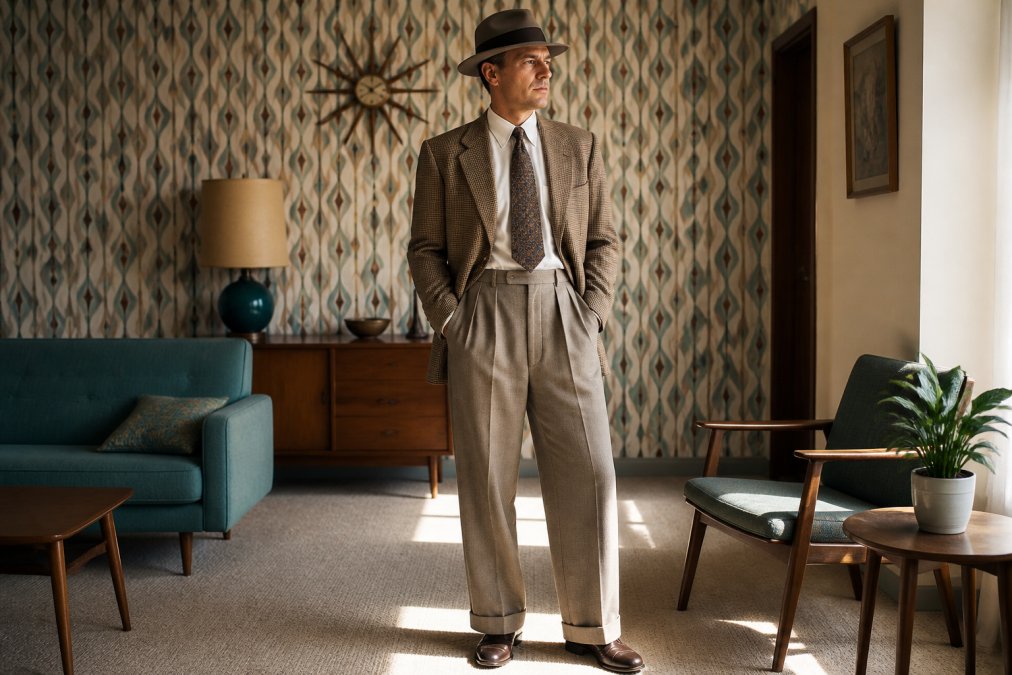
The foundation of the decade's look was the suit, but the real style was expressed in how the pieces were combined. A loud Hawaiian shirt under a sober gabardine sport coat was a statement of personality. This mix of formal tailoring with casual, often bold, shirts is the defining tension of the era's menswear history, and it is the first thing to master when assembling your wardrobe.
7 Men's 1950s Fashion Staples You Need
Building an authentic wardrobe doesn't require a massive haul. A curated selection of seven versatile items forms the backbone of countless period-correct outfits. Prioritize quality fabrics and correct cuts over quantity to achieve the right look.
The Essential Shirt: From Sport to Dress
The shirt is where the 1950s man expressed the most individuality. Dress shirts featured button-down collars or precise, medium-spread collars, often worn with a tie. The real star, however, was the sport shirt, which was worn untucked or open at the neck. These featured camp collars, bold geometric patterns, and fabrics like rayon or fine wale corduroy, offering a casual sporty alternative to the stuffiness of a business suit.
Trousers and Jeans: The High-Rise Foundation
Trousers sat at the natural waist, typically 11 to 12 inches in the front rise, creating a long, clean line through the leg (vintagefashionguild.org). Pleated slacks in wool blends or gabardine were the standard for dress, while cuffed trousers added weight and a classic finish. Denim trousers were strictly for work or rugged leisure, usually worn with a simple white t-shirt or a chambray shirt, and were often cuffed to show off the boots or penny loafers beneath.
Outerwear and Footwear: Finishing the Look
Outerwear ranged from the casual bomber jackets to more structured sport coats. The sport coat, often in a textured fabric like tweed or a bold plaid, was the single most important layering piece. For footwear, the options were clear: penny loafers for a smart-casual look, leather oxfords or brogues for dress, and sturdy work boots for more rugged outfits. A fedora or a trilby hat remained the definitive top accessory for formal occasions.
Vintage Inspired Bowling Shirts: The Casual Icon
No garment captures the casual spirit of the 1950s better than the bowling shirt. Originally functional team wear, it became a mainstream fashion item embraced by everyone from off-duty executives to greasers. A classic vintage inspired bowling shirt features a camp collar, a button front, and often two chest pockets, with the fabric being the primary source of visual interest.
These shirts are the perfect entry point into the style because they are inherently casual and easy to wear. They pair effortlessly with high-rise trousers, dark jeans, or even modern chinos, making them a bridge garment between the past and present. When sourcing one, look for quality details like custom buttons and unique fabrics, which distinguish a superior reproduction from a generic costume piece. For clubs or bars wanting a cohesive retro identity, custom bowling shirts with embroidered logos are a standout option that provides both authenticity and branding.
How to Style 1950s Menswear for Today
The challenge is wearing these pieces without looking like you are attending a themed party. The secret is to treat 1950s items as building blocks within a modern wardrobe, not as a full costume. Start with one or two key pieces and build your outfit around them.
A good starting point is pairing a vintage-inspired bowling shirt with modern, straight-leg denim and clean white sneakers. This introduces the retro print without overwhelming the look. For a more polished approach, wear a high-rise pleated trouser with a modern knit polo or a simple t-shirt. The vintage aesthetic comes from the trousers' fit and drape, not from a head-to-toe period outfit.
The goal is to capture the timeless style and confidence of the era while remaining comfortable and appropriate for today's context. Mixing a 1950s sport coat with a contemporary t-shirt and jeans is a classic way to achieve a look that is both stylish and historically informed.
Where to Find Quality Pieces: Authentic vs. Reproduction
The biggest mistake men make is not distinguishing between a costume and a wardrobe. A cheap, polyester "1950s costume" from a party store will fall apart and look wrong. A high-quality reproduction or a well-preserved vintage piece will last for years and look sharp. The key is to understand the three tiers of quality and where your money is best spent.
Tier 1: Costume Grade (Avoid)
This is the low-end market. Shirts are made from thin, shiny polyester, have inaccurate prints, and are cut to a modern, boxy fit. Jackets are often unlined or have flimsy construction. These items are fine for a one-night theme party but will not survive a season of regular wear. They are a waste of money if you are serious about the style.
Order Custom Shirts In Bulk! →
Tier 2: Modern Reproduction (The Smart Investment)
This is where you should spend the bulk of your budget. A good reproduction brand will use period-accurate details: single-needle stitching, correct collar construction (like a true camp collar), and high-quality fabrics such as rayon, gabardine, or wool. The fit is often modernized slightly, but the proportions, like the high rise of the trousers and the width of the lapels, are correct. These are the pieces you can wear regularly without fear of damaging a 70-year-old garment. When evaluating a brand, look for specifics: Do they list the fabric content? Do they provide garment measurements? Do they use custom buttons or off-the-shelf plastic ones? A brand that manufactures domestically often has better quality control and uses more durable materials.
Tier 3: Authentic Vintage (For the Collector)
This is the most challenging and rewarding path. True vintage offers unmatched authenticity and a unique piece of history. However, it comes with significant trade-offs. The fabric is often fragile; a 1950s rayon shirt can be delicate and prone to tearing at the seams. Sizing is inconsistent, as there was no standard sizing across brands. You will need to learn to read garment measurements, not tag sizes. The best places to find authentic pieces are estate sales, specialized vintage dealers, and online marketplaces like eBay, where you can filter by measurements. This path is best for specific, rare items, like a pristine Pendleton wool shirt or a silk tie with a unique pattern, rather than for building a daily wardrobe.
The Budget vs. Investment Strategy
A practical approach is to allocate your budget in tiers. Spend the most on the pieces you will wear most often: a pair of high-rise pleated trousers and a couple of high-quality sport shirts. These are the workhorses of the look. Spend a moderate amount on a single, versatile sport coat in a neutral color like navy or brown. Spend the least on accessories like hats and ties, where you can often find good deals on authentic vintage pieces, as they are less subject to wear and tear.
A common pattern is to start with two or three high-quality reproduction shirts and one pair of trousers. This gives you a solid foundation. As you grow more confident, you can add a sport coat and then begin hunting for unique vintage accessories to add personality. This tiered approach prevents you from wasting money on costume-grade items and ensures you build a cohesive, durable wardrobe that reflects the style and confidence of the era.
Sizing, Fit, and Care for Your Vintage Wardrobe
This is where most guides miss the mark. Vintage sizing is not modern sizing. A 1950s "Medium" fits more like a modern "Small" in the shoulders and chest (vintagefashionguild.org). When buying authentic vintage, always ask for the garment's actual measurements in inches, not the tag size. Compare those chest and shoulder measurements to a well-fitting modern garment you own.
For new reproductions, the fit is often modernized, but you should still be precise. The key is the high rise of the trousers. They should sit at your navel, not your hips. If you are between sizes, size up, as a tailor can easily take in a waist or taper a leg, but cannot add fabric where there is none. This is especially important if you have a curvier body type, as many retro brands cut slim; look for sellers who provide detailed garment measurements to ensure a proper fit.
Proper care will extend the life of your garments significantly. Invest in good wooden hangers for jackets and shirts to maintain their shape. Fold knit sweaters to prevent stretching. Address stains immediately, as vintage fabrics are more susceptible to setting. With the right maintenance, your pieces will last for years and continue to look sharp.
Conclusion: Building Your Timeless 1950s Wardrobe
Building an authentic 1950s wardrobe is a journey of curation, not a single shopping spree. Start with the foundational pieces: a pair of high-rise pleated trousers, one or two quality sport shirts, and a single sport coat. Focus on the silhouette and the fit, and you will find the look is surprisingly versatile and wearable.
At Steady Clothing, we believe that timeless style is built on quality craftsmanship. Our vintage-inspired apparel is designed and manufactured in the USA, using unique fabrics, custom buttons, and intricate embroidery to ensure durability and authenticity. Whether you are looking for a single statement piece or need custom shirts for your entire car club or bar staff, we offer the quality and customization that stands out.
Get started with Steady Clothing and build a wardrobe that captures the enduring appeal of mid-century menswear.
Frequently Asked Questions
What is the difference between 1940s and 1950s men's fashion?
The 1940s, shaped by wartime rationing, featured boxier, utilitarian suits with narrower lapels and shorter jackets. The 1950s embraced a more prosperous, relaxed elegance. Silhouettes became fuller with wider lapels, and the 'bold look' introduced bolder colors and patterns. Casual wear, like bowling shirts and Hawaiian shirts, also exploded in popularity, marking a clear shift from the more formal 1940s style.
How can I recreate a 1950s men's look on a budget?
Start with the most recognizable staples: a pair of high-rise pleated trousers or cuffed denim jeans, a button-down-collar shirt, and a pair of penny loafers. Look for these in thrift stores or from budget-friendly retailers. Focus on a single iconic piece, like a vintage inspired bowling shirt, to anchor the outfit. You can build a versatile, era-appropriate wardrobe without purchasing a full, expensive ensemble at once.
What should I wear to a 50s themed party?
For a casual '50s party, a vintage inspired bowling shirt worn with high-rise cuffed trousers and white sneakers or penny loafers is a solid choice. For a more formal event, opt for a dark suit with wide lapels, a skinny tie, and a fedora. If you're leaning into the 'greaser' style, a plain white t-shirt, cuffed dark denim jeans, and a leather jacket are the definitive staples.
Where can I find high-quality vintage-inspired menswear?
Look for brands that specialize in authentic reproduction, which focus on domestic manufacturing and period-accurate details. Specialty online retailers offer curated selections of both true vintage and new reproductions. While true vintage pieces from sources like eBay offer authenticity, sizing can be inconsistent. Modern reproduction brands provide the vintage aesthetic with consistent sizing and the durability of new fabrics.