Are Vintage Reproduction Clothing Brands Worth It?

Last Updated: November 12, 2026
Quick Summary
Vintage reproduction clothing is worth it when the garment solves a problem authentic vintage cannot: consistent sizing, dependable durability, and a return policy that actually protects you. Reproduction wins on fit confidence and longevity, but only if the maker respects construction and materials.
- Authentic vintage wins on collectability and resale value; reproduction wins on fit confidence and longevity.
- Check fabric weight, stitching, hardware, and panel alignment before buying any reproduction piece.
- Estimate wears per month times months of wear, then divide price by that number.
- Choose reproduction if you wear the style weekly and need a consistent size you can reorder.
- Reproduction pieces are made to be worn, not resold, so collectors should stay with authentic vintage.
Table of Contents
- Why Vintage Reproduction Clothing Brands Are Worth It
- Authentic Vintage vs Reproduction: A Side-by-Side Comparison
- The Best Vintage Reproduction Brands Build Around Construction and Materials
- How to Spot High-Quality Reproduction Clothing Before You Buy
- Cost Per Wear: Reproduction, Authentic Vintage, and Modern Clothing Compared
- Sizing, Fit, and Return Policies: Where Reproduction Brands Get It Right and Wrong
- Who Should Buy Vintage Reproduction Clothing, and Who Should Choose Alternatives
- Ordering Custom Retro Apparel for Your Group or Business
- Frequently Asked Questions
Why Vintage Reproduction Clothing Brands Are Worth It
Vintage reproduction clothing is worth it when the garment solves a problem authentic vintage cannot: consistent sizing, dependable durability, and a return policy that actually protects you. Vintage-inspired apparel made in the USA is worth considering when the garment is built to survive a modern wash cycle. The catch most shoppers miss is that "reproduction" covers a huge range, from faithful construction to cheap costume-grade imitations.
Here's the core tension. Authentic vintage offers history and collectability, but it arrives with unpredictable fit and hidden wear. Modern fast fashion offers low prices, but the fabric rarely lasts past a season. Reproduction sits in the middle, and its value depends entirely on whether the maker respects construction. Get that right and you have a garment that looks period-correct and wears like new. Get it wrong and you've paid vintage prices for a costume.
Below, we break down how reproduction compares to authentic vintage and modern clothing, how to spot quality before you buy, and who should actually choose each path.
Authentic Vintage vs Reproduction: A Side-by-Side Comparison
Authentic vintage is a one-of-a-kind original from a past decade; reproduction is a new garment built to match that era's cut, fabric, and detailing. The trade-offs run in opposite directions on almost every measure.
| Factor | Authentic Vintage | Reproduction | Modern Clothing |
|---|---|---|---|
| Sizing | Inconsistent, era-specific | Standardized | Standardized |
| Condition | Wear, fading, repairs | New | New |
| Availability | One-off, hunt required | In stock, repeatable | In stock |
| Durability | Depends on age and care | Predictable | Varies widely |
| Returns | Often final sale | Usually accepted | Usually accepted |
| Price | Variable, can be high | Mid to high | Low to mid |
The honest read: authentic vintage wins on collectability and resale value, while reproduction wins on fit confidence and longevity. If you need a specific size in a specific style by a specific date, reproduction is the practical answer.
The Best Vintage Reproduction Brands Build Around Construction and Materials
The best vintage reproduction brands are worth it because they spend money where you can feel it: fabric weight, seam reinforcement, and hardware. A reproduction maker cutting corners shows up fast in thin polyester, single-stitched seams, and flimsy buttons.
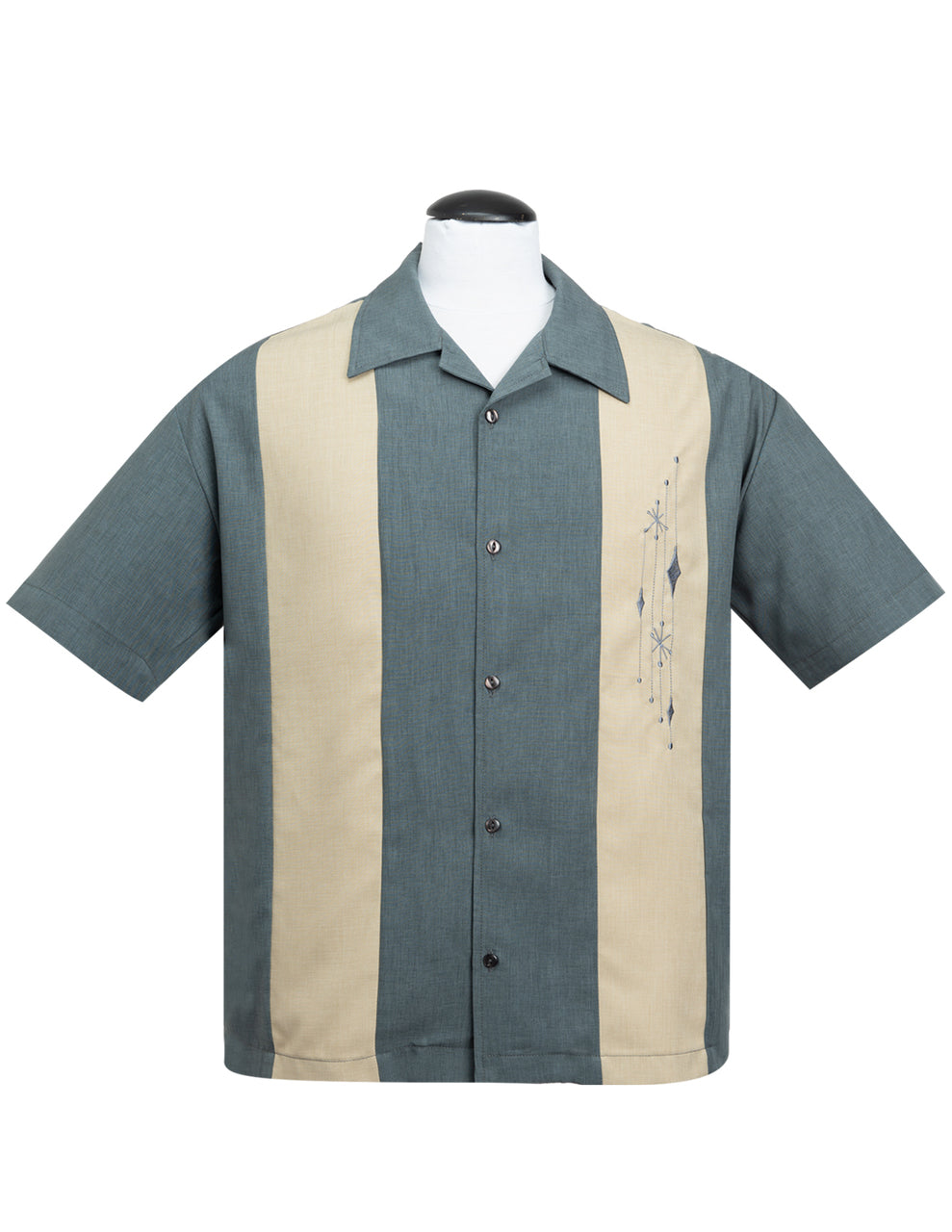
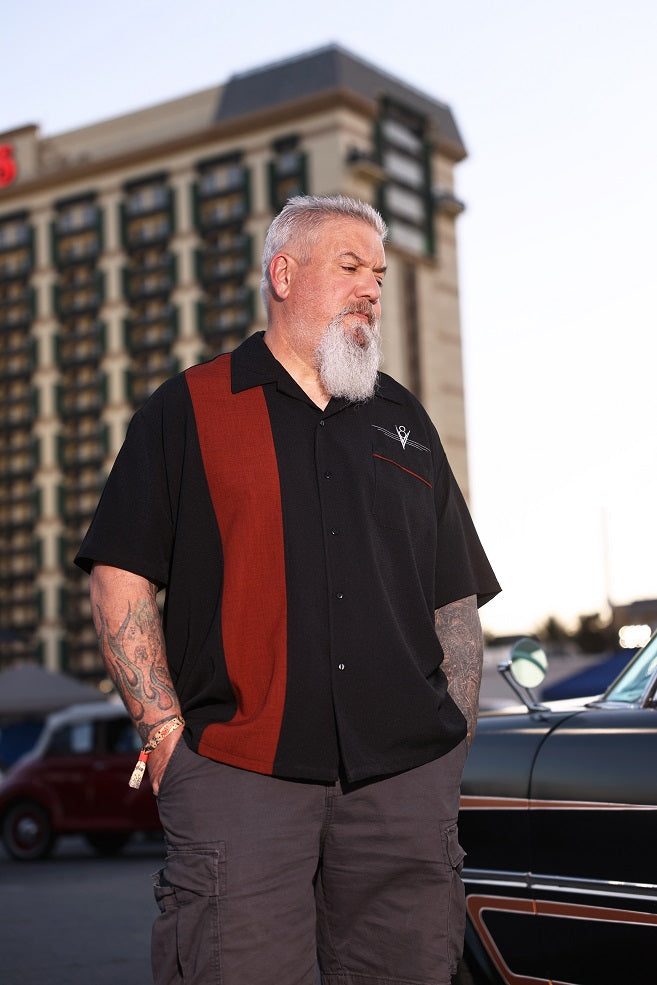
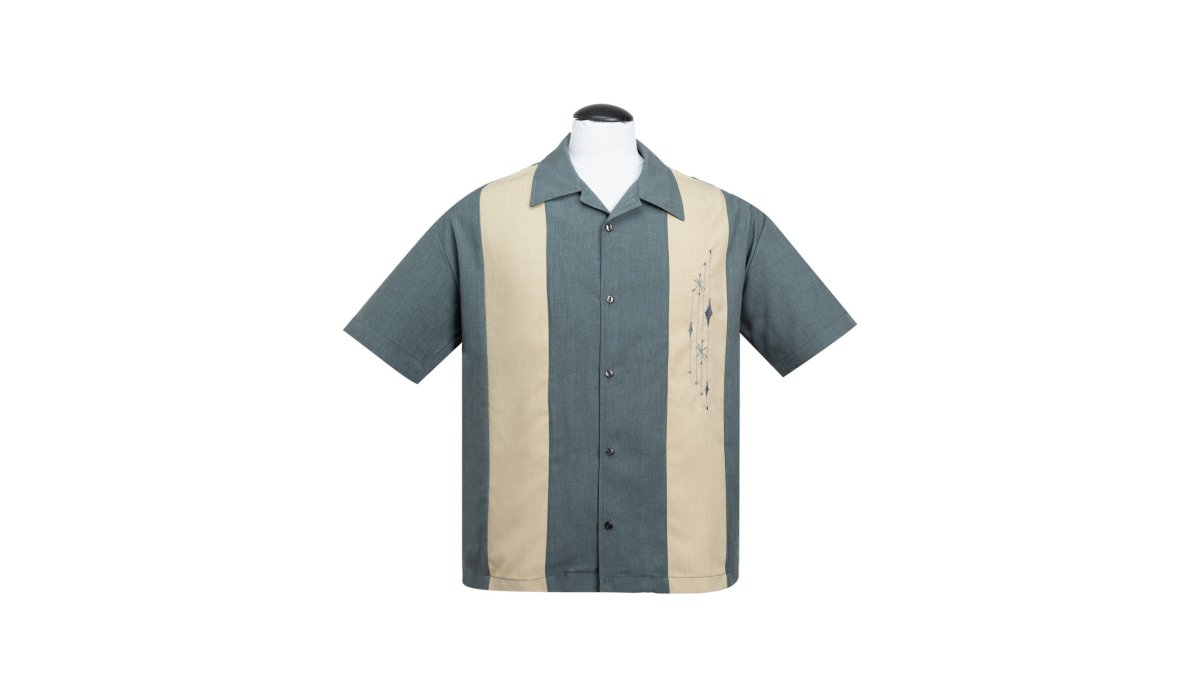
The Mid Century Marvel Bowling Shirt in Charcoal uses contrast panels and retro geometric embroidery, with monogram or specialty button options available. The V8 Classic Bowling Shirt in Black/Rust pairs a single-panel body with contrast V8 embroidery over the pocket. Both are made in the USA.
If you want to understand what reinforced seams and cost-per-wear really mean before judging any brand, read our guide on why quality craftsmanship matters in clothing. It covers how to spot durable garments and shop smarter.
How to Spot High-Quality Reproduction Clothing Before You Buy
Spotting high-quality reproduction clothing comes down to four checks you can run in under a minute. Most shoppers skip them and pay for it later.
- Fabric weight: Hold it to the light. Thin, see-through fabric will pill and stretch.
- Stitching: Look inside the hem. Dense, even stitching holds; loose single-stitch rows pull apart.
- Hardware: Buttons and zippers should feel solid, not hollow or loose.
- Lining and panels: Contrast panels should align cleanly at the seams, not pucker.
A common mistake is judging a reproduction piece by its product photo alone. Ask for real customer photos and check the return policy before ordering. If a maker won't show you the inside of the garment, that tells you something.
Cost Per Wear: Reproduction, Authentic Vintage, and Modern Clothing Compared
Cost per wear is the purchase price divided by the number of times you actually wear the item. It reframes the whole "is it worth it" question, because a cheap garment you wear twice costs more per wear than a well-made one you wear for years. Cost per wear reframes the purchase decision, so here is an example you can adapt to your own budget.
Take three bowling shirts at three price points. Consider three hypothetical bowling shirts at different price points to see how the math works. The numbers are illustrative only and are not Steady Clothing prices or measured wear data. The reproduction wins not because it is cheapest on the tag, but because the wear count is predictable and the garment does not need rescue repairs.
The math only works if the garment actually lasts. A reproduction maker cutting corners on fabric weight or seam construction collapses the wear count and pushes cost per wear back up toward fast fashion. That is why the construction checks in the next section matter more than the sticker price.
Authentic vintage can score well here too, but only when the piece is sturdy enough to survive regular wear without repeated repairs. A fragile 1950s rayon that needs hand washing and a seam repair every season rarely beats a well-made reproduction on cost per wear, even though its resale value may be higher.
A practical way to run this before you buy: estimate how many times per month you will realistically wear the piece, multiply by the months you expect it to last, and divide the price by that number. If the result is under a dollar per wear, the purchase is doing its job. If it is several dollars per wear, you are paying for novelty rather than value.
The takeaway: judge reproduction by how many wears you will realistically get, not by the price tag alone. Durable construction is what makes the math work in your favor.
Sizing, Fit, and Return Policies: Where Reproduction Brands Get It Right and Wrong
Sizing is where reproduction brands earn trust or lose it. Authentic vintage sizing follows old-era patterns that don't map to modern bodies, so a "medium" from decades ago may fit nothing like today's medium. Good reproduction makers publish real measurements and cut for modern fit.
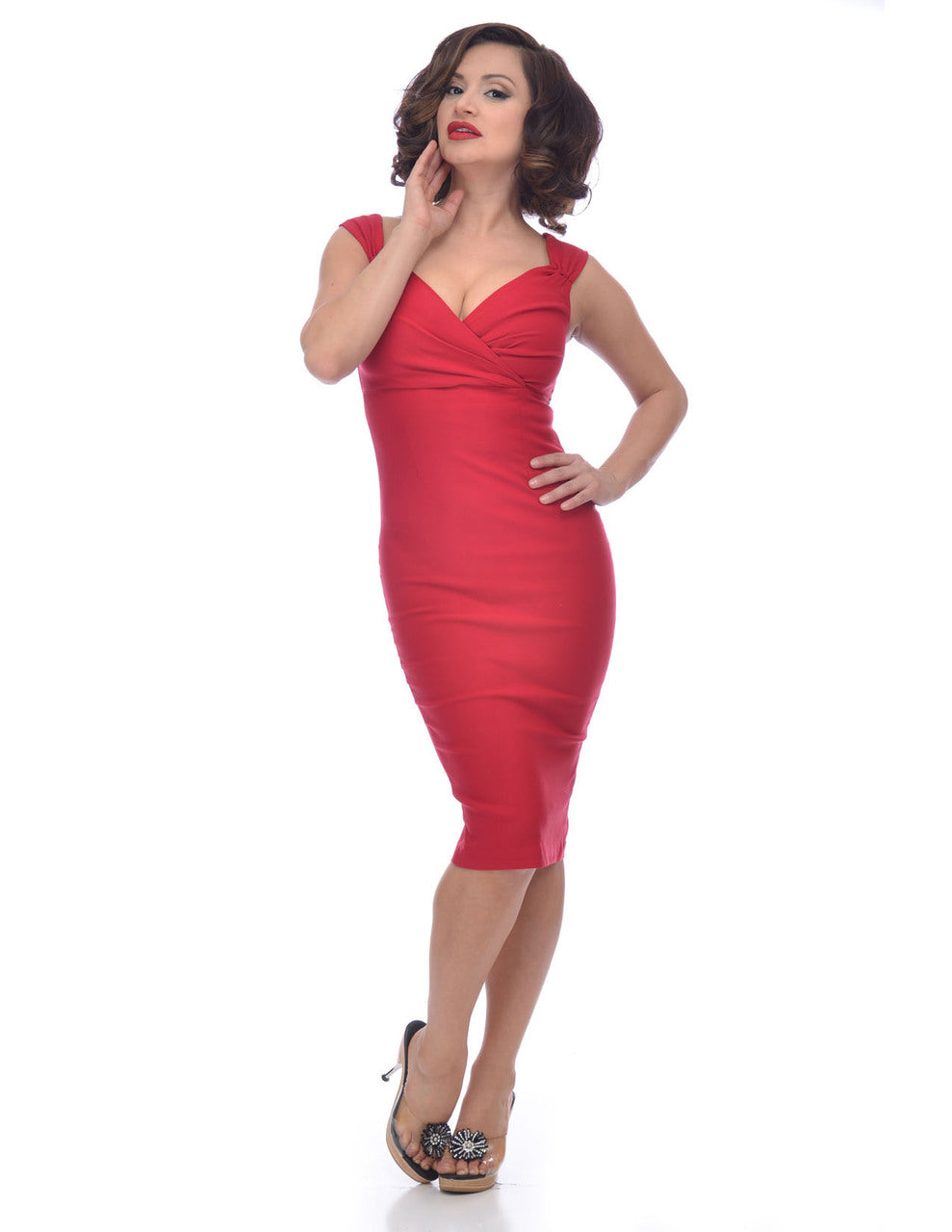
Our Diva Dress in Red is made from 4-way stretch fabric, and the Cora Pencil Skirt in Black uses 4-way stretch as well, which allows a close fit without limiting movement. For detailed measurement guidance, our vintage sizing guide explains how old sizing translates to modern bodies, and women can dig into our retro apparel sizing guide for women for fit specifics.
The other half of the equation is returns.
Who Should Buy Vintage Reproduction Clothing, and Who Should Choose Alternatives
Most brand roundups tell you what to buy but not whether you are the right buyer. This section turns the general advice into a decision you can make in a few minutes by matching your budget, wear frequency, era, and fit needs to the right path.
Choose reproduction if: you wear the style at least weekly, you need a consistent size you can reorder, you want a return policy that protects you if the fit is off, or you are building a wardrobe around one defined era and need pieces that hold up to regular washing.
Choose authentic vintage if: you are collecting for resale or historical value, you enjoy the hunt, and you can accept final-sale terms and occasional repairs. Authentic pieces reward buyers who know their measurements and are comfortable with imperfections.
Choose modern mainstream clothing if: you need an occasional costume on a tight budget and do not expect the garment to last past a few wears. Fast fashion is the cheapest entry point but the worst cost per wear over time.
Choose thrifting and secondhand if: you want the vintage look at a lower price and are willing to sort through inconsistent sizing and condition. Thrifting is the best fit for shoppers who enjoy the search and can inspect garments in person.
A simple decision rule: if you can name the era you want, the size you need, and roughly how often you will wear the piece, reproduction is usually the right call. If any of those three is unclear, start with secondhand or a single reproduction piece before committing to a full wardrobe.
Watch out: buying reproduction as an investment is a common mistake. Reproduction pieces are made to be worn, not resold, so collectors chasing resale value should stay with authentic vintage.
If American manufacturing is part of why you are considering the price, our case for American made retro apparel lays out the reasoning.
Ordering Custom Retro Apparel for Your Group or Business
Custom retro apparel works best when you order from a maker who handles bulk production in-house and confirms embroidery and timeline details up front. Bars, car clubs, and teams increasingly want branded staff uniforms or event shirts with a period look.
We make custom shirt manufacturing available in bulk, with unique fabrics, embroidery, and custom buttons. For a car club ordering 20 to 30 bowling shirts, the key questions are sample approval, embroidery placement, and turnaround. For a full walkthrough of options and turnaround, see our guide to custom bowling shirts for groups.
The challenge with reproduction clothing isn't finding it, it's finding makers who respect construction as much as style. That's the gap Steady Clothing was built to close. We design and manufacture vintage-inspired apparel in the USA, with unique fabrics, custom buttons, and intricate embroidery, and we offer custom bulk orders for groups and businesses. Get started with Steady Clothing and build a wardrobe that looks period-correct and holds up to real wear.
Frequently Asked Questions
What is the difference between vintage and vintage reproduction clothing?
Authentic vintage clothing was made in the era it represents, typically before the 1990s, and has survived decades of wear. Vintage reproduction clothing is newly manufactured to look like those eras using modern fabrics and construction. Reproduction pieces offer consistent sizing, fresh materials, and no risk of fragile seams or hidden damage. Authentic vintage offers collectability and true historical fabric, but availability is limited to whatever has survived in wearable condition, and sizing varies wildly from piece to piece.
Are reproduction clothing brands better quality than modern fast fashion?
It depends on the brand, but well-made vintage reproduction clothing usually outlasts fast fashion because the designs demand sturdier construction. Retro styles like bowling shirts and pencil skirts rely on structured panels, reinforced stitching, and quality buttons, and some brands use heavier fabrics. Fast fashion copies of retro styles often use thin polyester and skip the embroidery detail. Check for a stated material composition, country of manufacture, and care instructions before assuming quality.
Do vintage reproduction clothes hold their resale value?
Reproduction clothing generally resells for less than authentic vintage because it is not rare and can be reordered new. Limited runs and discontinued colorways from established retro brands do hold some value on secondhand marketplaces, but treat reproduction as a wardrobe purchase rather than an investment. Authentic vintage in excellent condition appreciates because supply shrinks every year. If resale matters to you, buy reproduction for daily wear and collect authentic pieces separately.
How do you determine if a vintage reproduction brand is high quality?
Look for four signals: a specific fabric composition rather than vague terms like premium blend, clear construction details such as custom buttons or embroidery, a stated manufacturing location, and real customer photos showing the garment on different body types. Ask about return policies and sizing charts with actual measurements. Brands that publish measurements and stand behind their fit are usually confident in their product.
Is it better to buy authentic vintage or reproduction clothing?
Buy authentic vintage if you want a one-of-a-kind piece, care about historical fabric, and are comfortable with inconsistent sizing and limited return options. Choose reproduction if you need a specific size, want to wear the garment regularly without worrying about wear and tear, or need multiple matching pieces for a group. Reproduction also wins for custom orders like embroidered bowling shirts for a car club, since you cannot bulk-order matching authentic vintage in consistent sizes.
