Alternatives to Screen Printed Staff Shirts Compared

Quick Summary
The best alternatives to screen printed staff shirts are DTF printing for small, full-color runs, DTG for complex low-quantity designs, and embroidery for a polished, durable finish. Screen printing charges setup per color, so small orders can cost more per shirt. Compare total cost, including setup and expected replacements, before choosing.
- Screen printing setup costs stay roughly the same whether you order 12 shirts or 120.
- DTF printing transfers full-color designs without the per-color penalty of screen printing.
- Embroidery has a $40.00 setup charge and includes one embroidered proof for approval.
- Compare total cost of ownership: setup, garment cost, decoration, replacement rate and reorder labor.
- Ask for a wash-tested sample and wash it five to ten times before committing to a full run.
Table of Contents
- Why Screen Printing Is Not Always the Right Fit for Staff Shirts
- DTF Printing for Staff Shirts: Full-Color Results on Small Runs
- DTG vs Screen Printing for Custom Shirts: Which Wins on Cost and Detail
- Embroidered Staff Shirts: Durability and Professional Finish
- Heat Transfer Vinyl and Sublimation: Where They Fit and Where They Don't
- Cheap Alternatives to Screen Printed Staff Shirts and Their Real Cost
- Choosing the Right Method for Your Next Staff Shirt Order
- Frequently Asked Questions
Why Screen Printing Is Not Always the Right Fit for Staff Shirts
Last Updated: November 7, 2026
Screen printing is the default for staff shirts, and for good reason: it is durable, inexpensive per shirt on large runs, and works on most fabrics. But for many small teams, it is simply the wrong tool. A bar, café or club may order 12 shirts only to find setup charges that make the per-shirt cost higher than expected.
Screen printing builds a separate stencil for each color in a design. Setup time and screen costs stay roughly the same whether you order 12 shirts or 120, which is why small batches feel expensive. Multi-color logos or detailed artwork add more screens, and every extra color adds cost.
A common mistake is choosing a method based only on the per-shirt price on a quote. The better question is how many shirts you need, how many colors your logo has, and how often you will reorder. Those three answers usually point away from screen printing for small, varied or detailed orders.
DTF Printing for Staff Shirts: Full-Color Results on Small Runs
Direct-to-film (DTF) printing transfers a full-color design onto fabric using a printed film and heat-activated adhesive powder. Because there are no screens to set up, DTF handles full-color designs without the per-color penalty of screen printing.
DTF can suit small and medium runs where the logo has several colors. Ask for a sample before committing to a large order.
Before ordering, ask for a physical sample on the exact shirt fabric you plan to use. Print looks different on cotton than on polyester, and the wash result is what matters for staff who wear their shirts every shift.
DTG vs Screen Printing for Custom Shirts: Which Wins on Cost and Detail
Direct-to-garment (DTG) printing applies ink directly to the shirt without screens.
Screen printing still wins on cost once you reach larger quantities with simple, few-color designs. Its ink sits on top of the fabric and tends to hold up well to repeated industrial washing. DTG wins when the design is complex and the quantity is low.
The practical comparison is simple. The cheaper method depends on quantity and artwork, so compare written quotes for your exact design. Get two written quotes for your exact design and quantity before deciding, because the crossover point depends on your artwork.
Embroidered Staff Shirts: Durability and Professional Finish
Embroidery stitches the design into the fabric rather than printing on top of it. The result looks tailored and professional, and it holds up well to frequent washing and wear. For staff who interact with customers, embroidered logos on a polo or button-up often read as more polished than a printed chest graphic.
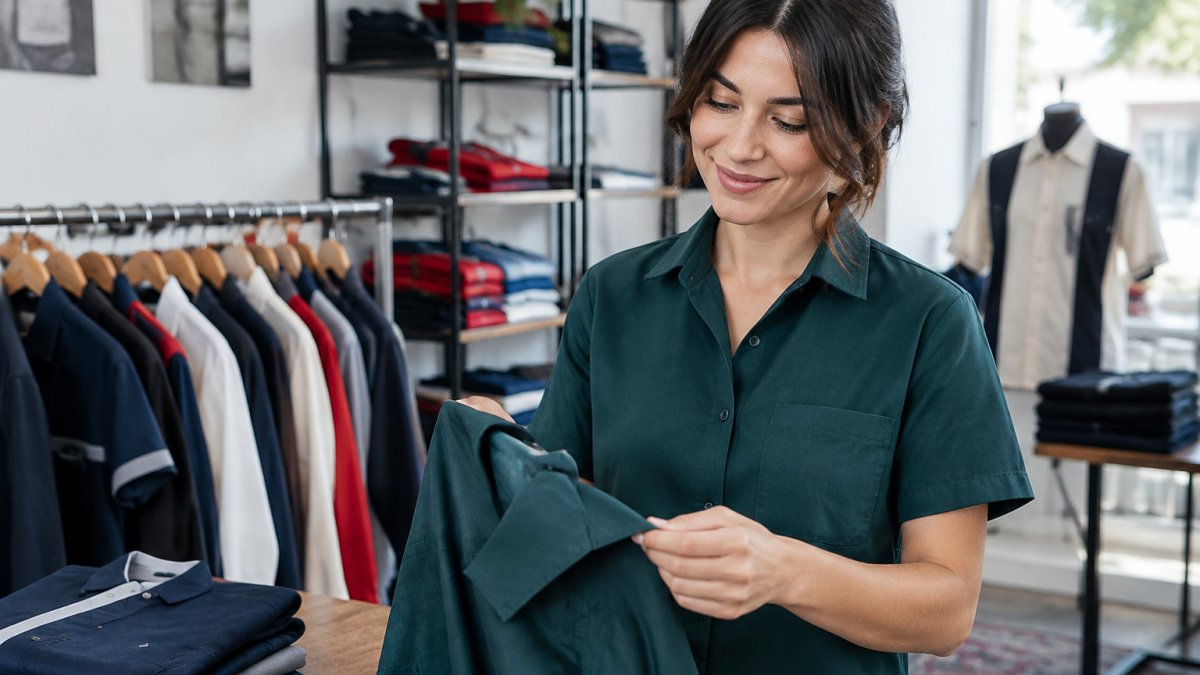
Embroidery has a one-time setup cost for digitizing and a proof for approval, then prices per piece. The Embroidery Set Up Charge is $40.00 and includes one embroidered proof for approval. Embroidery Set Up Charge explains what the fee covers.
Simple, bold logos generally suit embroidery best.
Heat Transfer Vinyl and Sublimation: Where They Fit and Where They Don't
Heat transfer vinyl (HTV) is a method used for simple names and numbers.
Cheap Alternatives to Screen Printed Staff Shirts and Their Real Cost
Most guides stop at the sticker price per shirt. For staff uniforms, that number is misleading, because a work shirt is worn repeatedly, washed constantly, and reordered when someone is hired or a shirt is damaged. The real comparison is total cost of ownership: setup fees plus garment cost plus decoration cost plus replacement rate plus the labor of reordering, spread across the shirt's usable life.
Build the comparison in four lines. First, one-time setup: screen charges per color, embroidery digitizing, or DTF/DTG file prep. Second, per-piece decoration cost at your actual quantity, not the 100-piece rate. Third, garment cost, since a $12 blank and a $35 work shirt behave very differently under washing. Fourth, expected replacement rate, which is where cheap methods quietly lose.
Low-cost decoration methods can wear out faster, so total cost over time may be higher than the sticker price suggests. Ask suppliers for a wash-test sample and wash it five to ten times before you commit to a full run; that single test tells you more than any quote.
Minimums also distort the math. Screen printing's setup is spread across the run, so a 12-shirt order can carry a per-shirt setup burden several times higher than a 150-shirt order. DTF and DTG remove the screen setup but may carry their own file-prep or minimum-order terms, so read the quote line by line rather than comparing the bold per-shirt number.
Steady Clothing's Poplin Single Panel Bowling Shirt in Black/Lime Green is $49.99, and the PopCheck Wide Double Panel Button Up in Mint/White is $57.99. A simple worksheet, setup + (per-piece x quantity) + (replacement rate x garment cost) + reorder labor, will usually reorder your shortlist within ten minutes.
Watch out: quotes that omit setup, art fees, or shipping make the cheap option look cheaper than it is; ask for an all-in landed cost at your exact quantity before comparing.
Sticker price alone misleads, so the article breaks total cost into four lines you can compare across methods.
| Cost line | What to check | Why it matters |
|---|---|---|
| One-time setup | Screen charges per color, embroidery digitizing, DTF/DTG file prep | Setup is spread across the run, so small orders carry more per shirt |
| Per-piece decoration | Price at your actual quantity, not the 100-piece rate | Quoted rates often assume larger runs |
| Garment cost | Blank price and work-shirt durability | A $12 blank and a $35 work shirt behave very differently under washing |
| Replacement rate | How often shirts need reordering | Cheap methods can wear out faster and cost more over time |
| Reorder labor | Time spent re-sourcing and reapproving artwork | Adds hidden cost to every repeat order |
| Hidden fees | Art fees, shipping, minimums | Quotes that omit them make cheap options look cheaper |
Choosing the Right Method for Your Next Staff Shirt Order
Start with the garment, not the decoration, since fabric affects how well each decoration method performs. Pick the shirt your staff will actually wear for a full shift, then match the method to it.
Next, answer four questions in order. How many shirts now, and how many per year after that? How many colors and how much fine detail does the logo carry? How hard will the shirts be worn and washed? And will you reorder the same design for new hires? Small, multi-color, detailed, one-off orders point to DTF or DTG. Large, simple, few-color runs point to screen printing. A polished, long-wearing finish on a polo or button-up points to embroidery. Full-color allover designs on polyester point to sublimation.
Ask for a wash-tested sample to judge durability under your own work conditions, and follow the garment's care label.
Brand consistency across repeat orders is where staff programs fail quietly. Keep a record of your artwork, colors, shirt style and fabric so reorders match. Confirm with the supplier how reorders and setup fees are handled.
Comfort and placement matter for staff who wear the shirt all shift. A large chest print can feel heavy and reduce breathability; a left-chest logo or a sleeve hit is lighter and often more professional. Ask for the print's hand feel on the actual fabric and check placement against your logo's proportions before approving.
A practical sequence: choose the garment for the job, confirm fabric compatibility, match the method to quantity and artwork, run a wash-tested sample, then compare all-in cost including setup and expected replacements. Steady Clothing offers custom shirt manufacturing in bulk, made in the USA, with unique fabrics, custom buttons and embroidery available. Order custom shirts in bulk with Steady Clothing to get a sample before you commit to a full run.
Frequently Asked Questions
What are some alternatives to screen printing for staff shirts?
The main alternatives include direct-to-garment (DTG) printing, direct-to-film (DTF) printing, embroidery, heat transfer vinyl and sublimation. Each method trades off setup cost, color range, fabric compatibility and durability, so match the method to your design and order size.
What's better for staff shirts, DTF or screen printing?
Screen printing can become more economical as order quantities grow and the design uses a few solid spot colors. If your team orders the same design repeatedly in large batches, compare quotes for the lowest per-shirt price.
Is embroidery a good alternative to screen printing on work shirts?
Yes, embroidery is a strong choice for work shirts, especially for logos, names and simple text. It carries a setup charge per design. At Steady Clothing, the Embroidery Set Up Charge is $40.00 and includes one embroidered proof for approval.
What's cheaper for a small staff order, DTG or screen printing?
Screen printing spreads its setup cost over many shirts, so per-shirt prices tend to fall as quantities rise. Compare quotes at your actual quantity, since the cheapest method changes with order size.
