Custom Bulk Vintage Apparel vs Blank Shirts for Retro Style

Last Updated: November 19, 2026
Quick Summary
Bulk vintage apparel delivers authentic retro style because the garment itself carries the vintage character through fabric weight, construction, and fit, with decoration supporting it. Choose panel shirts over generic blanks, since a distressed print on a thin tee rarely reads as vintage. Compare fabric, minimums, cost per unit, and turnaround before you commit.
- Panel shirts start at $49.99, while wide double panel styles run $57.99 per unit.
- Allow 3 to 5 business days for monograms and specialty buttons in production.
- Discharge printing removes dye for the softest hand and best authentic fading.
- Approve a proof on the actual garment and ink color, never a screen mockup alone.
- Bulk pricing steps down at quantity breaks, so per-unit cost at 30 pieces differs from 12.
Table of Contents
- Custom Bulk Vintage Apparel vs Blank Shirts: What Actually Delivers Authentic Style
- Quick Comparison: Customizable Apparel Options for Bulk Vintage Orders
- Bulk Custom Vintage Shirts: What to Compare Before You Commit
- Bulk Apparel Printing Methods for a Genuine Vintage Look
- Custom Vintage T-Shirts With Preview: Approving Art Before You Print
- Building a Vintage T-Shirt Design Template That Survives Bulk Production
- Authentic Vintage Character vs a Merely Distressed Print
- Ordering Custom Bowling Shirts in Bulk From Steady Clothing
- Frequently Asked Questions
Custom Bulk Vintage Apparel vs Blank Shirts: What Actually Delivers Authentic Style
Most bulk orders fail on the blank, not the print. A thin, stiff tee with a distressed print will rarely read as authentic vintage style, no matter how good the artwork is.
Here is the distinction that matters. Bulk vintage apparel is a garment-first purchase: the fabric weight, construction, and fit carry the retro character, and the decoration supports it. A blank shirt is a canvas you decorate and hope for the best.
Below, we break down what to compare before you commit, how printing methods affect authenticity, and how to approve artwork so a 30-piece order looks like the sample.
Quick Comparison: Customizable Apparel Options for Bulk Vintage Orders
The fastest way to choose is to match the option to the look you want and the quantity you need. Custom panel and camp shirts give you the most authentic vintage character because the garment itself is designed for it. Standard blanks are cheaper and more flexible, but the retro feel depends entirely on the print. The table below compares the garment-first options side by side, and the cost breakdown that follows shows how the per-unit price actually moves once decoration, quantity, and shipping are added.
| Option | Vintage Authenticity | Customization | Best For | Base Price Per Unit |
|---|---|---|---|---|
| Poplin Double Panel Bowling Shirt, Black/Turquoise | High: panel construction, contrast trim | Custom buttons, embroidery, monogram | Teams and clubs wanting a true retro shirt | $49.99 |
| PopCheck Wide Double Panel, Black/Denim | High: wide panel, bold contrast | Custom buttons, embroidery, monogram | Groups wanting a bolder two-tone look | $57.99 |
| PopCheck Wide Double Panel, Mint/White | High: wide panel, lighter palette | Custom buttons, embroidery, monogram | Warm-weather events and summer crews | $57.99 |
| PopCheck Double Panel, Brown/Stone | High: muted, period-correct palette | Custom buttons, embroidery, monogram | Car shows and casual staff uniforms | $57.99 |
| Poplin Single Panel, Black/Lime Green | Medium-high: single contrast panel | Custom buttons, embroidery, logo | Budget-conscious groups wanting retro flair | $49.99 |
| Generic blank tee | Low: retro feel comes only from the print | Print only | Giveaways and one-off events | Varies |
Base Price Per Unit
How to Read the Comparison Table
Start with the authenticity column, not the price. A $49.99 panel shirt with real contrast piping and novelty buttons reads as vintage from across the room; a cheaper blank tee with a distressed print reads as a promotional item up close. The price gap per unit is small next to the cost of reordering.
Bulk-Order Cost Breakdown: What Moves the Per-Unit Price
The base price in the table is the garment only. Your actual cost per unit is built from six levers, and each one behaves differently at volume. Most practitioners find that groups underestimate the decoration and setup lines and overestimate the garment line.
- Garment type and base cost. A panel shirt carries more construction than a blank tee, so its base price is higher. That base price is also the most stable line in the quote, it rarely changes with quantity.
- Decoration method. Embroidery and monograms are priced per piece and per location. Screen printing is priced per color and per location, with a setup charge per screen. Discharge and water-based prints often carry a slightly higher setup than plastisol because the ink system is less common.
- Number of print locations and colors. Each additional location, front, back, sleeve, chest emblem, adds a per-unit charge and, for screen printing, another setup fee. Limiting a vintage design to one or two colors on one location is the single biggest cost lever after quantity.
- Order quantity. Bulk pricing typically steps down at quantity breaks, so the per-unit cost at 30 pieces is not the same as at 12. The setup fees are fixed, so they spread across more units as the run grows; the garment and per-piece decoration costs do not.
- Setup fees. Screen setup, digitizing for embroidery, and proof production are one-time charges per order, not per unit. On a small run they can be a meaningful share of the total; on a large run they become negligible.
- Shipping and packaging. Freight scales with weight and distance, and individual poly-bagging or size-labeling adds a per-unit handling charge. If you are shipping to multiple addresses, split shipments add cost that a single bulk delivery avoids.
A common pattern is that the garment line is the most visible number and the least negotiable, while the decoration, setup, and shipping lines are where a bulk buyer actually controls the total.
Watch out: a low base price can hide a high setup fee or a per-location decoration charge that only appears on the final invoice. Request a full landed-cost quote at your actual quantity before you compare two options on the sticker price alone.
Bulk Custom Vintage Shirts: What to Compare Before You Commit
Compare four things before you place a bulk custom vintage shirts order: fabric weight, construction, minimums and cost per unit, and turnaround. Get those right and the print is the easy part. Get them wrong and no artwork will save the order.
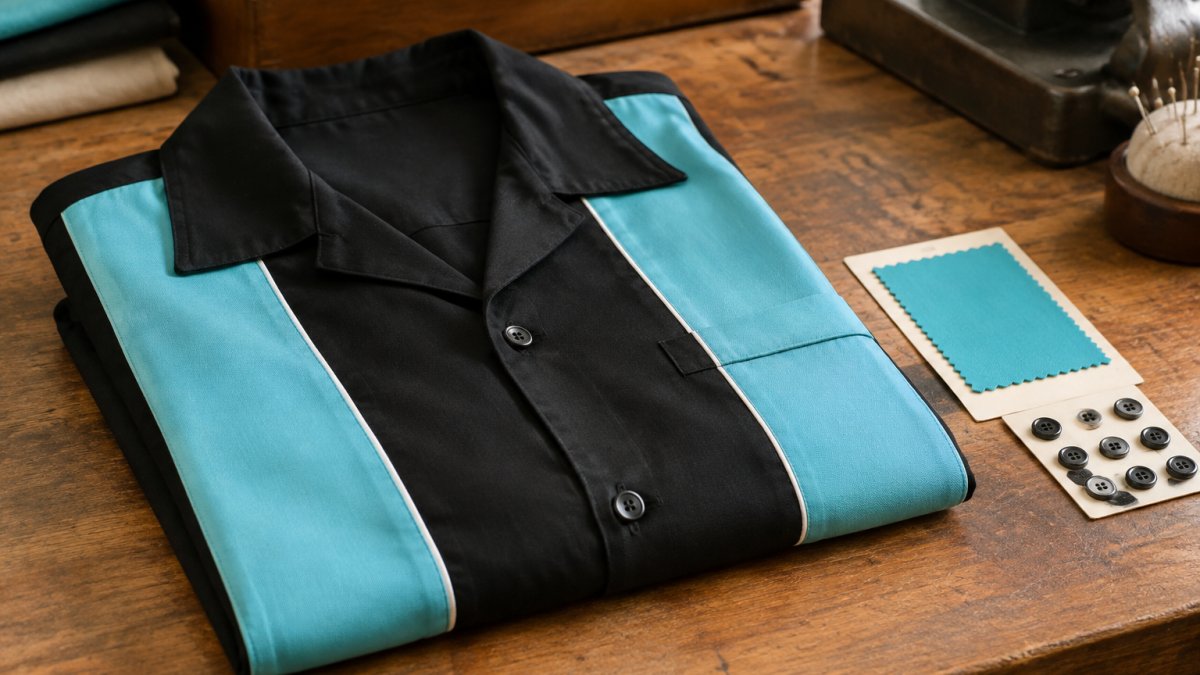
Fabric Weight, Construction, and Fit
Fit is where bulk orders go wrong most often. Vintage cuts run trimmer through the chest and shoulder than modern retail sizing, so collect measurements from your group rather than assuming sizes transfer. If your group includes curvier body types, size from actual chest and waist measurements, not the label. Our vintage sizing guide explains how period cuts map to modern bodies before you commit to a size run.
Minimums, Cost Per Unit, and Turnaround
Ask three questions of any supplier: what is the minimum order quantity, what is the cost per unit at my quantity, and how long from approval to delivery. Bulk pricing usually steps down at quantity breaks, so the per-unit cost at 30 pieces is not the same as at 12.
Turnaround has two halves: production and shipping. Custom buttons and monograms add days to production, so build that into your event date. Please allow 3 to 5 business days for monograms and specialty buttons, so build that into your timeline before you promise a date to your group.
Bulk Apparel Printing Methods for a Genuine Vintage Look
Screen printing remains the workhorse for bulk apparel printing methods, and discharge printing is the technique that actually produces a worn, vintage effect.
- Discharge printing: removes dye, softest hand, best for authentic fading
- Water-based screen printing: soft feel, subtle vintage fade, good for large runs
- Plastisol: durable and bright, but sits on the fabric and looks modern
- Embroidery: ideal for logos, monograms, and chest emblems on panel shirts
Custom Vintage T-Shirts With Preview: Approving Art Before You Print
Never approve artwork from a screen mockup alone. Ask for a proof on the actual garment in the actual ink color, because a design that looks right on a white background can disappear on a black panel.
- Request a proof on the actual garment and ink color
- Check logo size at arm's length, not zoomed in
- Confirm placement clears seams, buttons, and pockets
- Approve the exact Pantone color for brand consistency
- Sign off on a physical sample before the full run
Building a Vintage T-Shirt Design Template That Survives Bulk Production
A vintage T-shirt design template should be built around the garment's constraints, not around a flat design file. Panel shirts give you defined print zones, and a design that respects those zones will reproduce cleanly across a whole run. A design that ignores them will need reworking at proof stage.
Authentic Vintage Character vs a Merely Distressed Print
Authentic vintage character lives in the garment; a distressed print is a filter applied to artwork. You can tell the difference in seconds. Lift the fabric and look at the weave: real vintage character comes from the cloth, the cut, and the construction.
The tell is consistency. If the "wear" only exists inside the design, it is a print effect, not vintage character.
This is the difference between a shirt that looks vintage in photos and one that looks vintage in person. Construction is what you are paying for, and it is why craftsmanship matters when you are judging authenticity against a distressed print.
Ordering Custom Bowling Shirts in Bulk From Steady Clothing
Ordering custom bowling shirts in bulk starts with choosing a blank, then adding custom buttons and embroidery. Pick a panel shirt from our range and choose your custom buttons and embroidery. Our shirts are made in the USA from 100% polyester and are machine washable.
For groups new to bulk ordering, our group ordering guide walks through the full process from sizing to delivery. If you want a worked example, our car club bulk order guide shows how a club-sized order comes together. And if you want to anchor your comparison in an actual product, start with the Poplin Double Panel Bowling Shirt in Black/Turquoise at $49.99.
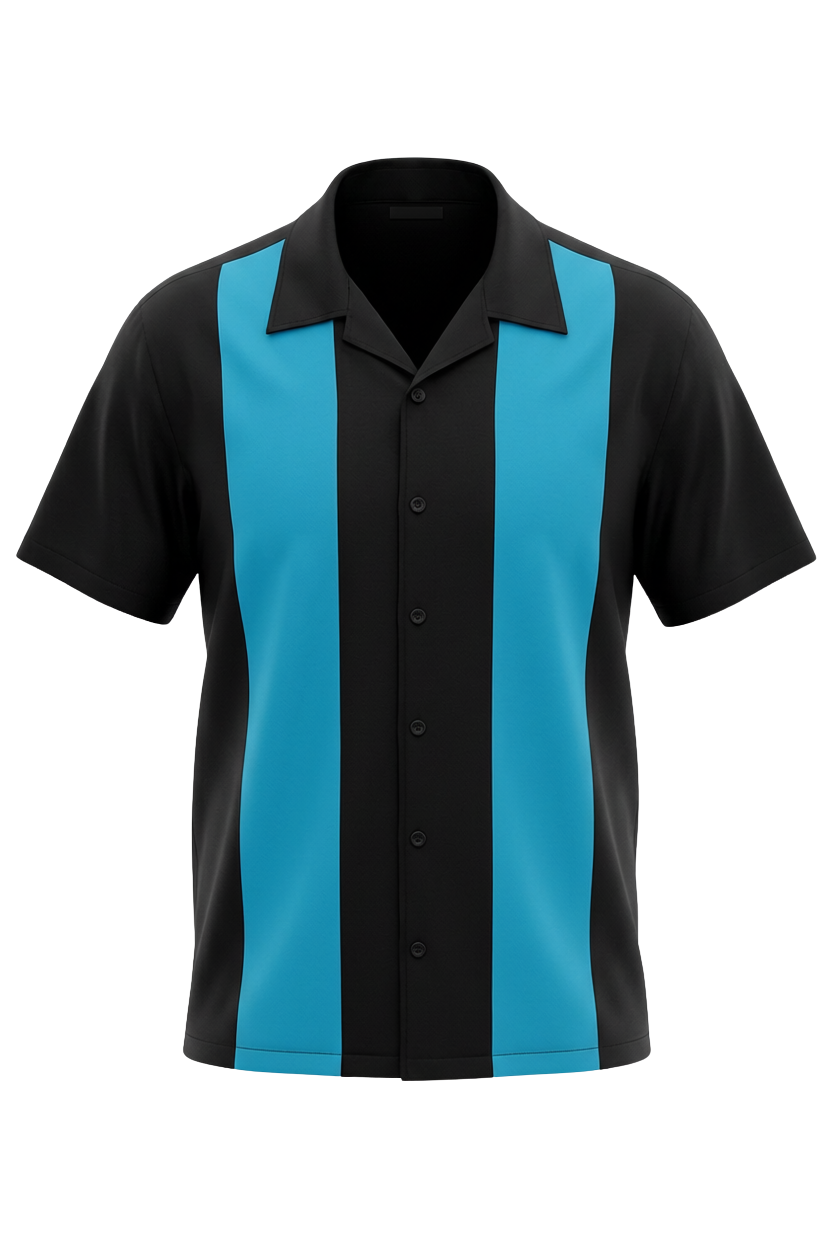
Bulk vintage apparel only works when the garment carries the look and the print supports it. That means choosing the right blank, approving a proof on the real thing, and locking a template you can reorder from. Steady Clothing builds vintage-inspired panel shirts in the USA with custom buttons and embroidery.
Frequently Asked Questions
Which decoration method is best for vintage-style bulk vintage apparel?
For a soft, worn-in look, discharge printing on 100% cotton blanks gives the most authentic result because the dye is removed rather than layered on top. Water-based screen printing also ages naturally and cracks gradually with wear. Plastisol sits heavier and looks newer for longer. If you want controlled distress, ask the printer for a halftone or simulated process build rather than a pre-distressed stock graphic.
Can custom vintage T-shirts with preview be approved before a full bulk run?
Yes, and you should insist on it. Ask for a digital mockup showing the print at actual size and placement on the specific garment blank, then request a physical sample or strike-off before the full run. Steady Clothing notes that monogram and specialty button work takes 3 to 5 business days, so build sample approval into your timeline rather than treating it as an afterthought.
How do I tell authentic vintage character from a merely distressed print?
Look at where the wear sits. Genuine vintage character shows in the garment itself: softened fabric, slight color variation, and wear at the collar and cuffs that follows how the body moves. A distressed print alone usually shows uniform cracking across the graphic with a stiff hand feel underneath. If the shirt is crisp and new but the print looks sanded, you are looking at a treatment, not age.
What should I compare when ordering bulk custom vintage shirts?
Compare five things: garment construction and fabric weight, the printing method and how it ages, minimum order quantity and cost per unit at your volume, proofing and sample approval terms, and reorder availability. Ask whether the exact blank and Pantone color will still be available in six months. Reorder consistency matters more than a few cents per unit when you are outfitting a team or club.
How many pieces do I need for bulk vintage apparel pricing to make sense?
It depends on the supplier, but the practical threshold is usually where setup costs stop dominating the per-unit price. For a club ordering 20 to 30 bowling shirts, screen setup fees spread across the run, so a single-color chest logo is far cheaper per unit than a five-color front and back design. Confirm the minimum order quantity in writing before you design, because it shapes what is worth printing.
