Vintage Sizing Guide 2026: Fit Modern Bodies

Table of Contents
- Why Vintage Sizing Differs From Modern Sizing
- How to Measure for Retro Clothing Accurately
- Vintage Clothing Size Conversion Chart and Standards
- Understanding Vintage Labels and Sizing Standards
- The Role of Ease and Seam Allowance in Vintage Patterns
- Fabric Composition and Its Impact on Vintage Fit
- Common Vintage Garment Fit Issues and Solutions
- Vanity Sizing and Regional Variations in Vintage Clothing
- Frequently Asked Questions
Last Updated: September 22, 2026
Why Vintage Sizing Differs From Modern Sizing
A vintage sizing guide reveals how vintage sizing differs fundamentally from modern sizing because garment construction, body standards, and manufacturing practices have shifted dramatically. A dress labeled "size 8" from the 1950s bears little resemblance to a contemporary size 8, proportions, ease allowances, and fit are entirely different.
Mid-century garments were designed for narrower shoulders, higher waistlines, and less generous hip allowances than modern patterns. Vanity sizing didn't exist in the same way during the vintage era, a 1940s size 12 reflected honest measurements, while today's size 12 varies wildly between brands.
Natural fibers like cotton, wool, and silk dominated vintage production and behave differently than modern blends. Vintage patterns incorporated specific seam allowances and ease calculations based on fabric drape; modern synthetics and stretch fabrics require different construction.
How to Measure for Retro Clothing Accurately
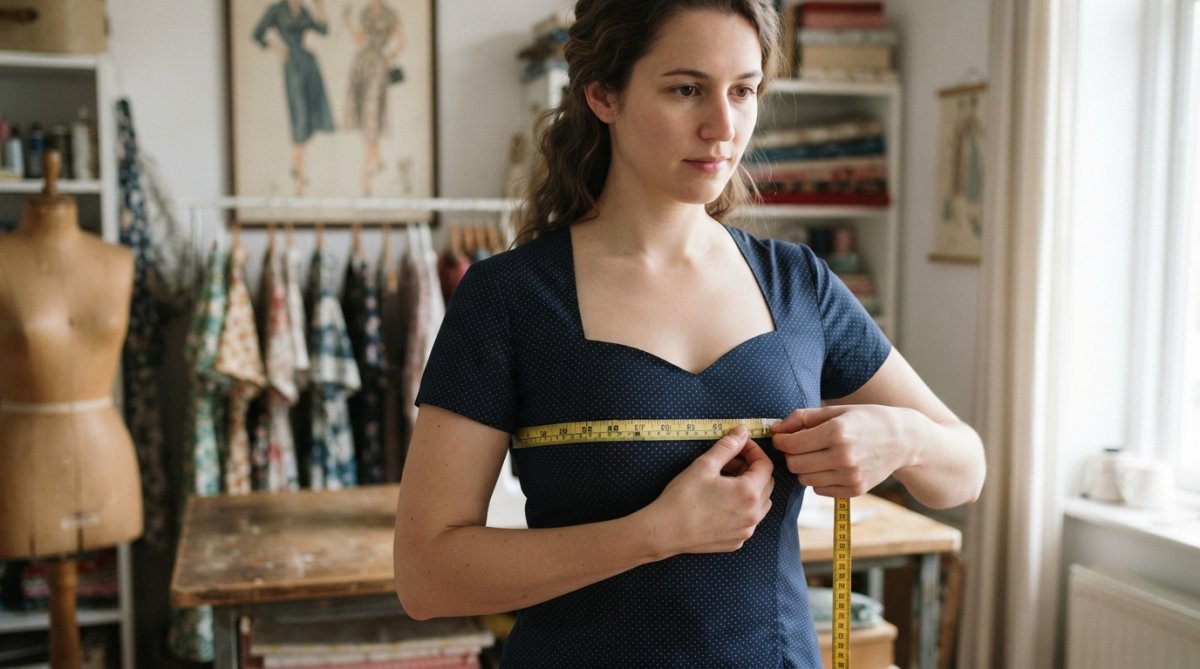
Accurate measurement is the foundation of finding well-fitting vintage and vintage-inspired clothing. Unlike modern retail, vintage shopping demands precision with a fabric tape measure, mirror, and ideally a second person.
Essential Measurements: Bust, Waist, and Hip
Measure your bust at the fullest part of your chest without padding. Wrap the tape measure snugly around the widest point, keeping it parallel to the ground, firm but not tight, with room for one finger underneath.
Find your natural waist at the narrowest point between ribs and hip bones, where vintage garments typically sit. Measure with the same snug-but-not-tight approach.
Measure hips at the fullest point with feet together. Hip measurement is especially important for mid-century silhouettes, which feature fitted waists with generous hip room.
Measuring Torso Length and Shoulder Width
Measure torso length from the base of your neck to your natural waist. This varies significantly between people and directly affects how vintage-inspired pieces drape. A dress designed for a shorter torso will gap at the waist on someone with a longer frame.
Measure shoulder width across the back from outer shoulder bone to outer shoulder bone. This determines whether armholes sit correctly and prevents shoulder seam roll, a common issue with vintage patterns designed for narrower frames.
Taking Flat Lay Measurements of Vintage Garments
When evaluating a vintage piece, lay it flat on a table with buttons or zippers fastened. Measure across the bust from seam to seam, then double for full circumference, how most vintage listings report measurements.
Measure waist the same way, then double it. For length, measure from shoulder seam to hem. These flat lay measurements provide a baseline for comparison against your own measurements.
Vintage Clothing Size Conversion Chart and Standards
Size conversion between vintage and modern sizing has no single universal standard, different decades, manufacturers, and garment types followed different conventions. However, general patterns emerge from historical sizing data.
Women's Vintage Size Conversions
A vintage size 8 from the 1950s typically corresponds to a modern size 4-6; a vintage size 12 maps to modern size 8-10. Vintage garments were cut smaller overall, with less ease and narrower shoulders.
Conversions become more complex with vanity sizing and regional variations.
PopCheck Blank Bowling Shirt in Black →
| Vintage Era | Vintage Size | Approximate Modern Equivalent | Key Notes |
|---|---|---|---|
| 1940s-1950s | 8 | 4-6 | Narrow shoulders, high waist |
| 1940s-1950s | 12 | 8-10 | Fuller hip room than modern |
| 1960s | 6 | 2-4 | Varied by designer |
| 1960s | 10 | 6-8 | Shift dresses run larger |
| 1970s | 8 | 4-6 | More ease than 1950s |
| 1970s | 12 | 8-10 | Proportions closer to modern |
Men's Vintage Size Conversions
Men's vintage sizing is generally more consistent than women's. A vintage size 40 jacket typically corresponds to modern size 40, but fit differs significantly, vintage jackets featured higher button placement, shorter sleeves, and narrower shoulders.
Understanding Vintage Labels and Sizing Standards
Vintage labels provide limited reliable information. Manufacturers applied size labels inconsistently, and no federal standard governed women's sizing until much later. A "medium" from one 1950s manufacturer might fit dramatically differently from another brand's "medium."
The Role of Ease and Seam Allowance in Vintage Patterns
Ease, the difference between your body measurement and the garment's finished measurement, fundamentally shapes fit. A dress with 2 inches of ease fits snugly; one with 4 inches is noticeably more relaxed. Vintage patterns typically incorporated less ease than modern garments.
Fabric Composition and Its Impact on Vintage Fit
Natural fibers dominated vintage garment production, and these materials behave distinctly from modern synthetics and blends. Cotton, wool, silk, and linen each have specific drape characteristics and recovery properties that vintage patterns relied upon. A wool dress designed in 1955 incorporated ease calculations based on how wool would move and recover; the same design in modern polyester-cotton blend will fit and feel entirely different.
Common Vintage Garment Fit Issues and Solutions
Shoulder seam roll occurs when the shoulder seam sits too far forward on your shoulder, creating a visible roll of fabric. This happens frequently with vintage pieces because vintage patterns featured narrower shoulders than modern bodies. If you experience this issue, the garment's shoulders are too narrow for your frame. Tailoring can shift the seam slightly, but significant adjustment becomes expensive.
Vanity Sizing and Regional Variations in Vintage Clothing
Vanity sizing, the practice of labeling garments with smaller numbers than their actual measurements, wasn't invented recently, though it's accelerated significantly. Some vintage manufacturers engaged in subtle vanity sizing, particularly in the 1960s and 1970s as competition intensified. However, it was far less extreme than modern vanity sizing, making vintage labels slightly more reliable than contemporary ones.
Frequently Asked Questions
Does vintage-inspired clothing run smaller than modern sizes?
Yes, vintage-inspired sizing typically runs smaller than contemporary clothing. A vintage size 12 from the 1950s corresponds roughly to a modern size 6-8 today. This difference stems from changes in vanity sizing, body composition measurements, and how ease is built into garment patterns. Always measure yourself and compare against the brand's specific size chart rather than assuming your modern size will fit a vintage piece.
How do I accurately measure myself for retro-style garments?
Use a soft fabric tape measure and wear minimal clothing. Measure your high bust (just under the arms), full bust (at the fullest point), natural waist, and hip (at the widest point). Keep the tape snug but not tight. For vintage-inspired pieces, also measure torso length and shoulder width. Record measurements to the nearest half-inch. Compare these numbers directly to the brand's size chart, which varies significantly between manufacturers.
What is the difference between true vintage sizing and modern vintage-inspired sizing?
True vintage pieces follow historical sizing standards from their era, often with inconsistent grading and smaller overall dimensions. Modern vintage-inspired clothing, like Steady Clothing's designs, maintains the aesthetic. Vintage-inspired pieces typically run smaller than modern everyday wear but larger than authentic 1940s-1960s garments. Always check individual brand sizing charts, as standards vary significantly even among brands specializing in retro styles.
Why does sizing vary so much between retro clothing brands?
Vintage-inspired brands use different fit models, ease allowances, and fabric compositions, creating inconsistent sizing across the market. Some brands prioritize authentic historical proportions, while others adjust for modern body types. Fabric choice affects stretch and drape, influencing how garments fit. Regional manufacturing practices and grading systems also differ. This is why measuring yourself and consulting each brand's specific size chart is essential rather than relying on your size from one vintage-inspired retailer to predict your size elsewhere.
How can I convert my modern measurements to vintage-inspired brand sizes?
First, measure your bust, waist, and hip accurately using a soft tape measure. Then consult the brand's vintage clothing size conversion chart, which maps modern measurements to their vintage-inspired sizing. Most conversion charts show that a modern size 10 corresponds to a vintage-inspired size 12-14, though this varies by brand. Look for charts that include high bust and full bust measurements, as these provide more precision than waist alone.
What measurements matter most when fitting vintage-inspired pieces?
High bust and full bust are critical for tops and dresses, as vintage patterns often feature darts and fitted bodices that depend on accurate bust measurement. Waist and hip measurements determine how garments drape and fit through the torso. For dresses, torso length is essential to ensure the hemline falls at the intended point. For men's vintage-inspired shirts like Steady Clothing's bowling shirts, shoulder width and pit-to-pit (armhole to armhole) measurements ensure proper fit. Always prioritize the measurements the brand emphasizes in their size chart.
Can I tailor vintage-inspired clothing if it doesn't fit perfectly?
Yes, many vintage-inspired pieces can be tailored by a skilled seamstress, though costs vary. Common adjustments include hemming, taking in side seams, and adjusting darts. However, altering shoulder width or armhole depth is more complex and expensive. Vintage-inspired fabrics like rayon and stretch blends require experienced tailoring. Before purchasing, check if the piece is close to your measurements, minor adjustments are affordable, but major alterations may cost more than the garment itself.