Mister Freedom vs The House of Foxy: A Detailed Comparison

Table of Contents
- Mister Freedom vs The House of Foxy: Quick Comparison
- Design Philosophy and Historical Accuracy
- Construction Techniques and Garment Quality
- Fit, Sizing, and Target Demographics
- Best Vintage Reproduction Brands: Price-to-Value Analysis
- How to Style Retro Clothing from Each Brand
- Which Brand Should You Choose?
- Frequently Asked Questions
Last Updated: September 30, 2026
Mister Freedom vs The House of Foxy: Quick Comparison
When you're shopping for mister freedom vs the house of foxy vintage-inspired clothing, you're choosing between two brands with dramatically different approaches to retro fashion. Mister Freedom leans heavily into workwear and military aesthetics from the 1930s-1950s, while The House of Foxy specializes in swing-era dresses and feminine silhouettes from the 1940s. Both deliver period-accurate garments, but they target different body types, style preferences, and budgets.
| Factor | Mister Freedom | The House of Foxy | Best For |
|---|---|---|---|
| Primary Era | 1930s-1950s workwear | 1940s swing fashion | Depends on your style |
| Fit Focus | Relaxed, authentic workwear cuts | Fitted, curvy-friendly silhouettes | Curvy bodies prefer Foxy |
| Garment Types | Shirts, pants, jackets | Dresses, separates | Dresses: Foxy; Workwear: Freedom |
| Construction | Period-accurate techniques | Vintage reproduction methods | Both use authentic sewing |
| Price Range | Mid-range | Mid-to-premium | Budget-conscious: Freedom |
Design Philosophy and Historical Accuracy
Both brands obsess over authenticity, but they're pulling from different historical moments and different wardrobes.
Mister Freedom's Approach to Period-Accurate Garments
Mister Freedom builds its entire catalog around workwear and military-inspired pieces from the 1930s through 1950s. Their design philosophy centers on reproducing what actual workers wore: gas station attendants, factory workers, soldiers. Every seam, every button placement, every fabric weight reflects research into historical garments.
Their shirts feature authentic panel construction and period-correct rise and taper, prioritizing historical accuracy over contemporary comfort.
This appeals to collectors and enthusiasts building authentic 1940s workwear wardrobes.
Their sizing runs generous (vintage workwear was cut loose) and color palettes stick to 1940s-1950s standards: grays, blacks, khakis, deep blues.
The House of Foxy's Era-Specific Focus
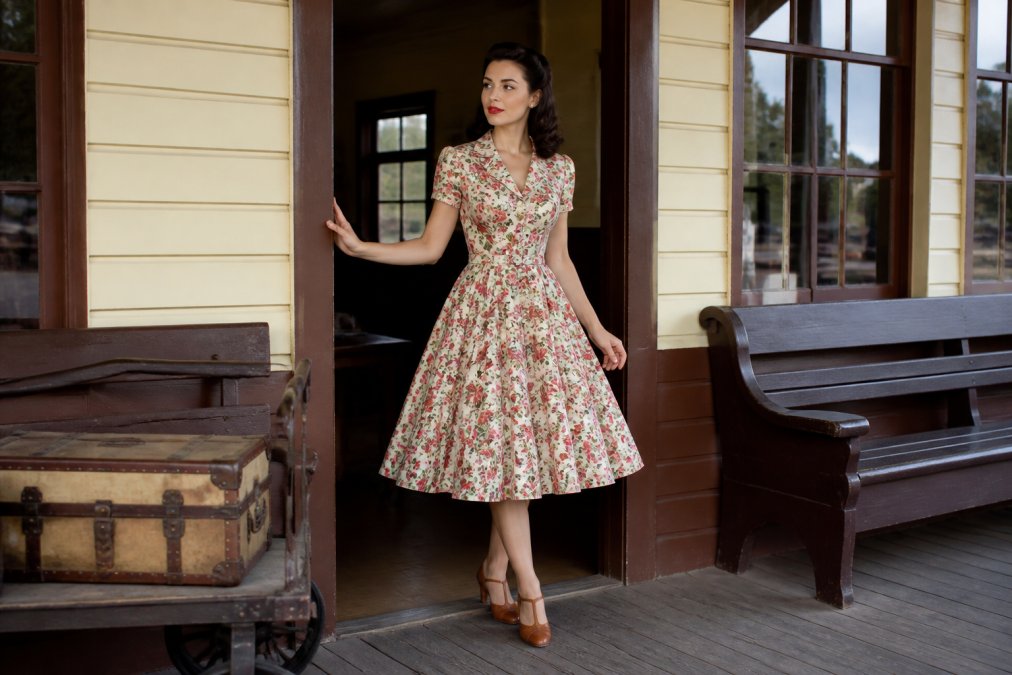
The House of Foxy zeroes in on swing-era fashion from the 1940s, particularly dresses designed for dancing and social wear. Their design philosophy prioritizes the silhouette: fitted bodices, full skirts, flattering cuts that emphasize curves.
They source original garments, deconstruct them, and rebuild patterns with deliberate adjustments for modern bodies: reinforced seams, modern nylon zippers, and historically inspired but practically modern fit.
This appeals to people with curvy body types who want 1940s aesthetics without fit frustrations.
Purists argue these pieces sacrifice historical accuracy for wearability, and the brand focuses primarily on dresses rather than workwear.
Construction Techniques and Garment Quality
Both use authentic sewing methods but differ in durability and reproduction approaches, directly affecting garment longevity and historical accuracy.
Fabric Sourcing and Material Durability
Mister Freedom sources heavier cotton and rayon blends standard in the 1940s-1950s, ensuring durability but less breathability than modern synthetics.
The House of Foxy blends period-weight fabrics with small amounts of synthetic content (e.g., 95% cotton with 5% elastane) for easier care and stretch.
Sewing Methods: Where the Real Difference Emerges
Mister Freedom uses flat-felled seams (period-correct for 1940s factory garments) and chain stitching (authentic but less durable if a thread breaks).
The House of Foxy uses lock stitching with double-stitched seams at stress points for extra strength, ensuring 50+ wears without seam failure (not historically accurate but more durable).
Mister Freedom prioritizes historical accuracy for close inspection; The House of Foxy prioritizes durability through regular wear without hand-mending.
Button Attachment and Hardware
Mister Freedom uses shank buttons (buttons with a metal loop underneath) attached with period-correct thread, often visible stitching that matches the era. This is historically accurate but means buttons can loosen if the thread wears.
The House of Foxy uses modern button attachment with reinforced thread and often backs buttons with a small fabric square underneath to distribute stress. Zippers are modern nylon construction rather than period-accurate metal, which won't corrode or stick.
Real-World Durability Implications
A Mister Freedom shirt will likely outlast a House of Foxy dress in terms of raw fabric longevity, heavy workwear cotton simply doesn't wear out as fast as lighter dress fabric. But a Foxy dress will survive more wears without seam failure or button loss because of reinforced construction. If you wear a piece 2-3 times per month, Mister Freedom's authentic seams are fine. If you wear a piece weekly, The House of Foxy's reinforced construction is the safer choice.
Fit, Sizing, and Target Demographics
Mister Freedom sizes generously (a medium fits like a contemporary large) for historically accurate relaxed fits. The House of Foxy sizes conventionally and designs for curvy bodies with bust darts, fitted waistbands, and hip-accommodating skirt fullness.
Poplin Double Panel Bowling Shirt in →
Best Vintage Reproduction Brands: Price-to-Value Analysis
Value depends on price, durability, and wear frequency. A $150 shirt worn weekly for 10 years costs $1.44 per wear; a $90 dress worn weekly for 2 years costs $0.87 per wear.
Mister Freedom: Price and Value Breakdown
Mister Freedom typically prices pieces in the $80-150 range for shirts and $120-200 for pants. A typical order might be one shirt and one pair of pants for $250-350 total.
A $120 Mister Freedom shirt worn twice monthly costs $5 per wear in year one, $2.50 in year two, and under $1 by year five, strong value for a decade-long garment.
Mister Freedom pieces hold 60-80% resale value. A $150 shirt sold after two years for $100 costs $0.96 per wear at twice-monthly frequency.
Best for: People who plan to wear pieces regularly, want investment-grade vintage-inspired clothing, and are willing to pay upfront for decades of wear.
The House of Foxy: Price and Value Breakdown
The House of Foxy runs $90-180 for dresses, often higher for special pieces or custom sizing. A typical order might be one dress for $120-150.
Cost-per-wear analysis: Foxy dresses are designed for regular wear and modern washing, so they'll survive 50-75 wears before showing significant wear (fading, seam loosening, elastic degradation). A $140 dress worn twice per month (24 times per year) costs $5.83 per wear in year one, $2.92 in year two, and $1.87 in year three. After three years, the dress is likely showing wear and may need repairs.
Investment value: Foxy dresses don't hold resale value as well as Mister Freedom pieces. The modern construction choices (nylon zippers, reinforced seams) make them less appealing to vintage purists, and the fit is optimized for contemporary bodies rather than historical accuracy. Secondhand Foxy dresses typically sell for 40-50% of original retail.
Best for: People who want dresses that fit immediately without alterations, prefer to rotate through multiple pieces rather than own one investment piece, and value wearability over historical authenticity.
The Value Equation: Frequency and Wardrobe Strategy
If you wear vintage-inspired clothing 2-3 times per month, Mister Freedom's higher upfront cost becomes a bargain over five years. You're spreading the cost across hundreds of wears.
If you wear vintage-inspired clothing once per month or less, The House of Foxy's lower price point makes more sense. You won't wear pieces long enough to justify Mister Freedom's durability premium.
If you're building a complete vintage wardrobe (multiple pieces you'll mix and match), Mister Freedom's investment value compounds.
Comparison Table: True Cost of Ownership
| Scenario | Mister Freedom | The House of Foxy |
|---|---|---|
| One $140 shirt, worn 2x/month for 5 years | $140 ÷ 120 wears = $1.17/wear | N/A (not applicable) |
| One $140 dress, worn 2x/month for 3 years | N/A | $140 ÷ 72 wears = $1.94/wear |
| One $140 dress, worn 1x/month for 3 years | N/A | $140 ÷ 36 wears = $3.89/wear |
| Three pieces ($400), worn in rotation 2x/month for 5 years | $400 ÷ 360 wears = $1.11/wear | N/A |
| Resale recovery (year 2) | 60-70% of original | 40-50% of original |
When to Choose Each Brand Based on Budget
Under $150 total budget: The House of Foxy. One dress at $90-140 is a complete outfit. Mister Freedom requires buying multiple pieces to create a cohesive look.
How to Style Retro Clothing from Each Brand
Mister Freedom pieces work best when you lean into the workwear aesthetic. Pair their shirts with high-waisted jeans or period-correct trousers. Add a leather jacket or denim overshirt. The brand's strength is building complete vintage outfits that feel cohesive and historically grounded.
Which Brand Should You Choose?
Pick Mister Freedom if you want historically accurate workwear, prefer relaxed fits, and value authenticity over modern convenience. Their pieces are built for people who understand garment construction and appreciate period-correct details.
Frequently Asked Questions
What is the primary difference in design philosophy between Mister Freedom and The House of Foxy?
Mister Freedom focuses on military-inspired and workwear aesthetics with period-accurate construction from the 1930s-1960s, emphasizing authenticity in every detail. The House of Foxy specializes in feminine vintage reproduction, particularly 1940s tea dresses and swing silhouettes designed for curvy body types. Both brands prioritize historical accuracy, but their target demographics and era focus differ significantly.
How do the best vintage reproduction brands compare on pricing?
Both Mister Freedom and The House of Foxy position themselves as premium vintage reproduction brands with higher price points than fast-fashion alternatives. Pricing reflects their commitment to authentic fabric sourcing, specialized sewing techniques, and limited production runs. Steady Clothing offers customizable bowling shirts starting at $49.99 with options for specialty embroidery and buttons.
Which brand offers better sizing for curvy body types?
The House of Foxy is specifically designed with feminine cuts and tailored fit for curvy silhouettes, making it the better choice if you have a fuller figure. Mister Freedom focuses on traditional men's workwear and military cuts, which typically run smaller and straighter. If you need vintage-inspired pieces that accommodate different body types, confirm sizing charts and consider brands that explicitly design for various proportions.
How do I know if garment construction is actually authentic?
Authentic vintage reproduction requires attention to sewing techniques, seam placement, button styles, and fabric weight. Period-accurate pieces use vintage-appropriate stitching methods, original pattern cuts, and historically accurate materials. Look for brands that document their construction process and source fabrics matching the original era. Both Mister Freedom and The House of Foxy provide detailed information about their garment construction and material sourcing.