How to Find Retro Clothing for Curvy Bodies: 2026 Guide

Table of Contents
- 1. Understand the Fit: True Vintage vs. Vintage-Inspired for Curves
- 2. How to Measure for Vintage Clothing: Your Sizing Conversion Chart
- 3. Where to Shop: Best Retro Clothing Brands for Curves
- 4. Styling Retro Outfits for Curvy Bodies: Silhouettes That Flatter
- 5. Alterations and Tailoring: Making Retro Clothing Fit Your Curves
- 6. Sustainable and Budget-Friendly Sourcing for Curvy Retro Clothing
- 7. How to Find Retro Clothing for Curvy Bodies: Your Step-by-Step Action Plan
- Frequently Asked Questions
Last Updated: September 14, 2026
1. Understand the Fit: True Vintage vs. Vintage-Inspired for Curves
Finding retro clothing for curvy bodies starts with one distinction most shoppers learn the hard way: true vintage and vintage-inspired garments are built to completely different size standards. True vintage pieces were cut for the body proportions of their era, and those proportions ran smaller and straighter than modern figures. Vintage-inspired clothing, by contrast, is designed today, with modern bodies and modern stretch fabrics in mind.
That difference decides everything about how a garment will fit you. A true 1950s wiggle dress in a labeled size 16 might measure closer to a modern size 8 at the waist (One Size Doesn’t Fit All - NISTory | NIST). Vintage-inspired retro clothing for curvy figures, like the pieces Steady Clothing makes, is drafted so a labeled size actually matches what you expect when you put it on.

Here is the practical split:
- True vintage: one-of-a-kind, era-specific sizing, often no stretch, frequently needs alterations
- Vintage-inspired: consistent modern sizing, stretch fabrics, cut for curves from the start
- Vintage reproduction: new garments built from period patterns, sizing varies by maker
2. How to Measure for Vintage Clothing: Your Sizing Conversion Chart
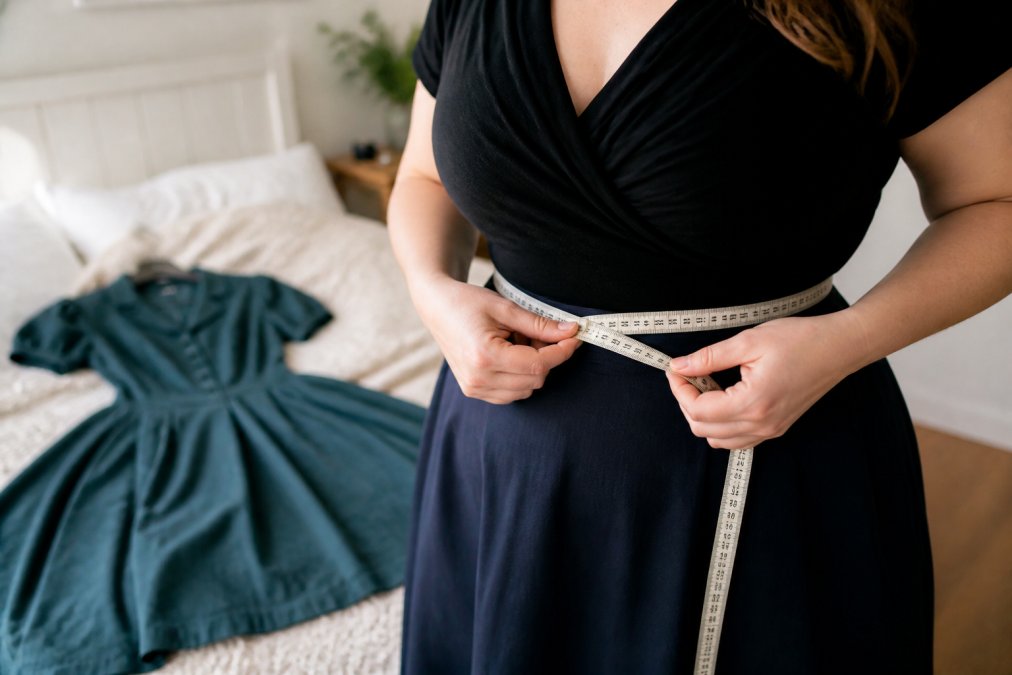
Learning how to measure for vintage clothing takes about five minutes and saves you from a drawer full of returns. You need a soft measuring tape, a mirror, and a fitted base layer. Measure yourself, not a garment, and write the numbers down before you shop.
Key Measurements to Take
Take four measurements and record each one:
- Bust: around the fullest part, tape level and snug but not tight
- Waist: at your natural waist, the narrowest point above your belly button
- Hips: around the fullest part, usually 7-9 inches below the waist
- Waist-to-hip ratio: divide your waist measurement by your hip measurement
That ratio matters more than any single number. Vintage patterns were drafted around a specific waist-to-hip relationship, and knowing yours tells you instantly whether a garment's cut will work with your silhouette or fight it.
Reading Vintage Size Charts
Vintage size charts list body measurements, not garment measurements, and they rarely match modern labels. A common approach is to ignore the size number entirely and match your own measurements to the chart's bust, waist, and hip columns, then size up if you land between two.
| Your Measurement | Where to Measure | Why It Matters |
|---|---|---|
| Bust | Fullest part of chest | Determines bodice fit |
| Waist | Natural waistline | Decides skirt and dress fit |
| Hips | Fullest part of hips | Controls skirt drape |
| Waist-to-hip ratio | Waist divided by hips | Predicts silhouette compatibility |
3. Where to Shop: Best Retro Clothing Brands for Curves
The best retro clothing brands for curves are the ones that publish real measurements and cut for a curvy silhouette rather than scaling up a straight-size pattern. That last part is where most brands fail. Grading a pattern upward adds width everywhere, including the shoulders and bust, without adding the shaping a curvy figure actually needs.
Steady Clothing builds its women's line around stretch fabrics and curve-conscious cuts. The Cora Pencil Skirt in Black, for example, uses a 4-way stretch blend (78% rayon, 17% nylon, 4% spandex) that clings without restricting movement, and it is made in the USA (the FTC). The Diva Dress in Red applies the same 4-way stretch to a classic pin-up silhouette.

Online Marketplaces and Thrift Stores
Online marketplaces and thrift stores are where you find authentic vintage, and both reward preparation. On marketplaces, ask sellers for flat-lay measurements before buying, since listings often show only the tag size. In person, shop the men's and plus-size racks first, because vintage women's sizing ran small and the larger labels are where the wearable pieces hide.
- Estate sales: best odds for well-kept mid-century pieces
- Consignment shops: curated, but priced accordingly
- Online vintage sellers: request measurements every time
- Thrift chains: hit or miss, but the cheapest way to experiment
Check fabric composition before you commit. Deadstock and era-specific fabrics behave differently from modern blends, and a garment with no stretch needs more room in the measurements than you might expect.
4. Styling Retro Outfits for Curvy Bodies: Silhouettes That Flatter
Styling retro outfits for curvy bodies comes down to silhouette, and the mid-century playbook already solved this problem. The era's most flattering cuts, the fit and flare, the high waist, and the pencil skirt, were designed to define the waist and skim the hips. That is exactly what a curvy figure benefits from.
Start with a defined waistline. A high-waisted skirt like the Pocket High Waist Thrills Skirt in Black sits at your natural waist and creates that definition instantly, and its deep pockets lie flat no matter how much you carry. Pair it with a fitted or tucked top to keep the waist visible.

Then choose your skirt shape by mood:
Order Custom Shirts In Bulk! →
- Pencil: sleek and pin-up, best in stretch fabrics
- Fit and flare: balances hips, easiest to wear
- Circle: dramatic and full, needs a structured petticoat
- High waist: elongates the leg, defines the waist
Accessorize with a wide belt at the natural waist and a cardigan cropped at the hip. Both draw the eye to your narrowest point instead of the widest.
5. Alterations and Tailoring: Making Retro Clothing Fit Your Curves
Tailoring is what turns a good vintage find into a garment you actually wear. A skilled tailor can take in a waist, shorten a hem, or adjust a shoulder seam for a modest cost, and the result fits better than anything off the rack.
Prioritize alterations by impact. Waist and hem adjustments are cheap and transform the fit. Shoulder and bust adjustments cost more and are worth it only on pieces you love. Before you buy, check the seam allowance, the fabric left inside a seam for letting out. True vintage often has generous seam allowance; modern garments frequently have almost none.
A common mistake is buying a garment that is too small and planning to let it out. Letting out is limited by the seam allowance, and many pieces have no room to give. Buy for your largest measurement and take in the rest.
6. Sustainable and Budget-Friendly Sourcing for Curvy Retro Clothing
Second-hand shopping is the most sustainable way to build a retro wardrobe, and it is also the cheapest. Every vintage piece you buy keeps a garment in circulation instead of in a landfill, and the sustainable fashion argument for thrifting is straightforward: the most sustainable garment is the one that already exists (the EPA).
Budget-friendly sourcing follows a few rules. Set a per-piece ceiling and stick to it. Shop off-season, when sellers clear inventory. Learn basic mending so a loose button or small tear does not send a good piece to the donation bin. And build around wardrobe staples, the pencil skirt, the high-waist bottom, the wiggle dress, rather than chasing one-off statement pieces you will wear twice.
Thrift flipping, buying second-hand and reselling, has pushed prices up in some categories, so know your target measurements and move fast when you find a match.
7. How to Find Retro Clothing for Curvy Bodies: Your Step-by-Step Action Plan
Finding retro clothing for curvy bodies is a repeatable process once you have your numbers. Here is the full sequence, start to finish.
- Measure yourself. Record bust, waist, hips, and waist-to-hip ratio. [Time: 10 minutes]
- Build a size card. Write your measurements on your phone so you never shop without them.
- Decide your lane. True vintage for one-of-a-kind pieces, vintage-inspired for reliable fit.
- Check the size chart. Match your measurements, not the label, and size up between sizes.
- Verify fabric composition. Stretch blends forgive; rigid fabrics do not.
- Ask for flat-lay measurements on any online vintage listing.
- Budget for tailoring. Add the cost of a waist or hem adjustment to your purchase price.
- Start with one staple. A high-waist skirt or pencil skirt teaches you your fit fast.
Expected result: within two or three purchases, you will know your measurements cold and be able to buy retro clothing for curvy bodies online without guessing.
The challenge with retro fashion has never been the style; it has been the sizing, and sizing is a solvable problem once you know your measurements and shop brands that cut for real bodies. Steady Clothing designs vintage-inspired apparel for curves and manufactures it in the USA, with stretch fabrics, curve-conscious cuts, and custom bulk orders for groups and businesses that want matching retro uniforms. Browse the women's collection or order custom shirts in bulk and build a retro wardrobe that fits the first time.
Frequently Asked Questions
What is the difference between authentic vintage and vintage-inspired clothing?
Authentic vintage clothing is an original garment from a past era, typically 20 years or older, with unique wear and historical construction. Vintage-inspired clothing is newly made in a retro style, using modern sizing and fabrics. For curvy bodies, vintage-inspired pieces often offer more stretch and inclusive sizing, while authentic vintage may require tailoring. Both can help you achieve a retro aesthetic, but vintage-inspired is generally more accessible and comfortable for everyday wear.
How do I measure my body correctly for vintage clothing?
Use a soft measuring tape to measure your bust, waist, and hips at the fullest points. Write down your measurements in inches and compare them to the brand's size chart. Remember that vintage sizing runs smaller than modern sizing, so you may need to size up.
What are the best vintage-inspired brands for plus-size figures?
Look for brands that specialize in vintage-inspired apparel with inclusive sizing. Steady Clothing offers a range of retro pieces designed to fit curves, such as the Cora Pencil Skirt and Diva Dress, made in the USA with stretch fabrics. Other options include online marketplaces. Always check size charts and customer reviews for fit accuracy before purchasing.
How can I style retro outfits to flatter a curvy silhouette?
Focus on high-waisted bottoms to define your waist and create an hourglass shape. Fit-and-flare dresses and pencil skirts work well for curves. Add a belt to cinch your waist, and choose fabrics with stretch for comfort. Accessories like cat-eye glasses and vintage-inspired jewelry can complete the look. Don't be afraid to experiment with era-specific styles like 1950s pin-up or 1960s mod to find what suits you best.